
What makes visitors convert is not about your flashy design or aggressive CTAs; they’re about structured factors that sync with their psychology while removing barriers that lead them to say “no”. You can pour thousands into ads and drive even more thousands of visitors to your page, but if those visitors don’t convert or at least become qualified leads, then it’s little more than wasted traffic and ad spend.
In this comprehensive guide, you’ll discover;
- Science-backed psychological triggers you can use to boost your conversion rate.
- Real-world case studies from industry leaders showing what works in practice.
- A practical framework you can implement immediately to improve your content conversion rate.
- Insights into the neuroscience of decision-making and how it drives user behavior.
- How subtle design elements can increase conversions by 160% or more.
The Science Behind Conversions
What is conversion?
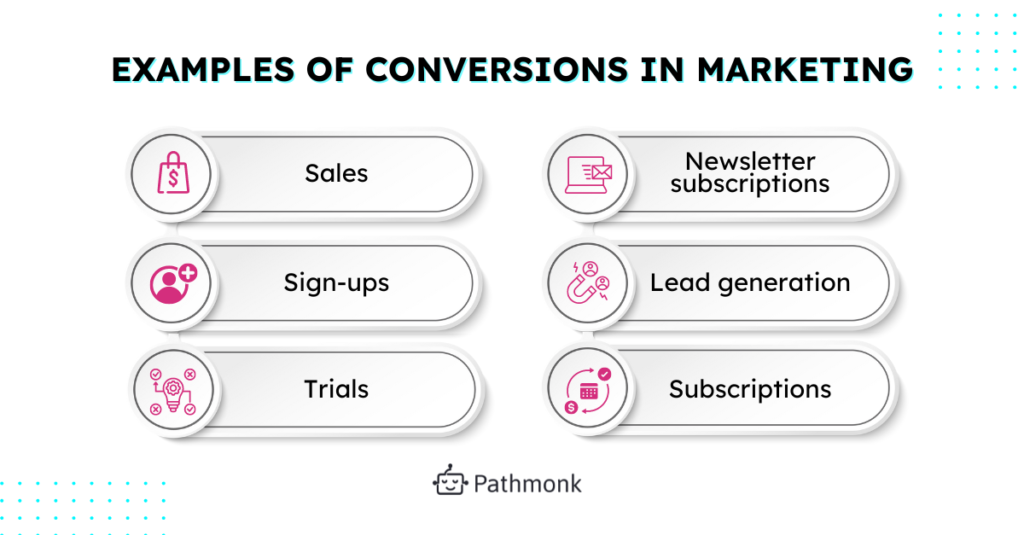
Many think of conversions purely as sales transactions; the reality is far broader. Conversion in marketing is any desired action a user takes, whether that’s signing up for your newsletter, downloading a white paper, requesting a demo, or ultimately making a purchase.
The psychological foundation of conversions rests on three pillars:
These three elements work together to explain why traditional marketing approaches often fail while psychology-based strategies consistently deliver results. When you grasp these fundamentals, you’ll see why a simple headline change can increase conversions by up to 37% in a specific scenario, or why moving a testimonial to a different page section can boost sales by 25%.
1. Behavioral Economics
How people make financial decisions when faced with uncertainty, time pressure, and cognitive limitations. Nobel Prize winner Daniel Kahneman’s research shows that humans are predictably irrational, making decisions based on mental shortcuts (heuristics) rather than pure logic.
Real-world examples:
- Loss Aversion: People prefer avoiding losses over acquiring equivalent gains (why “Don’t miss out on 20% savings” outperforms “Save 20%”)
- Present Bias: Immediate rewards feel more valuable than future ones (why “instant download” and “immediate access” increase conversions)
- Mental Accounting: People treat money differently based on its source or purpose (why customers spend gift cards more freely than cash)
- Endowment Effect: Once people imagine owning something, they value it higher (why “try before you buy” and visualization tools work)
- Anchoring Effect: The first price customers see influences all subsequent price judgments (why “Was $199, Now $99” works better than just “$99”)
2. Cognitive Biases
This is a systematic pattern of thinking that causes people to deviate from rationality. Although these can be used to misguide users but you should be transparent and avoid damaging your brand reputation with small mistakes.
Common biases in conversion contexts:
- Confirmation Bias: People seek information that confirms their existing beliefs (why customer testimonials from similar demographics are powerful)
- Bandwagon Effect: The tendency to follow the crowd (why “most popular” labels and social proof counters work)
- Authority Bias: Greater trust in perceived experts or authority figures (why expert endorsements and credentials boost conversions)
- Availability Heuristic: Recent or memorable information seems more important (why case studies with specific details outperform generic claims)
- Framing Effect: How information is presented affects decisions (why “90% fat-free” sells better than “contains 10% fat”)
- Decoy Effect: Adding a less attractive option makes the target option seem better (why three-tier pricing with a “decoy” middle option works)
3. Decision-Making Triggers
Environmental and psychological cues that prompt immediate action. Understanding these triggers allows marketers to create experiences that naturally guide users toward conversion.
Key environmental triggers:
- Visual Hierarchy: Eye-tracking patterns that naturally guide attention to conversion elements (F-pattern, Z-pattern layouts)
- Color Psychology: Red creates urgency, blue builds trust, green suggests “go” or approval
- White Space: Reduces cognitive load and focuses attention on key elements
- Progressive Disclosure: Revealing information gradually to prevent overwhelm
- Proximity: Related elements placed close together feel connected (contact info near testimonials)
Psychological action triggers:
- Curiosity Gap: Creating intrigue that compels users to click (“The secret technique that increased our sales by 300%”)
- Social Validation: Showing what others have done in similar situations
- Time Pressure: Legitimate deadlines that create appropriate urgency
- Effort Justification: When people invest effort (like filling out a quiz), they’re more likely to continue
- Commitment Escalation: Small initial commitments lead to larger ones
Research from behavioral psychology studies reveals that up to 95% of purchasing decisions are made subconsciously. This means your conversion optimization efforts must speak to both the rational and emotional mind.
Why this matters for conversions:
- The rational mind processes features, specifications, and logical benefits
- The emotional mind responds to feelings, stories, and psychological triggers
- Successful conversions address both simultaneously (logical justification + emotional motivation)
- Subconscious processing happens in milliseconds, while conscious evaluation takes much longer
- First impressions formed in 50 milliseconds often determine whether users continue or leave
Key Psychological Triggers That Drive Conversions
1. Social Proof: The Power of “Everyone Else is Doing It”
Social proof operates on a simple premise: when people are uncertain about what action to take, they look to others for guidance. This psychological trigger is so powerful that 92% of consumers trust peer recommendations over advertising (Nielsen).
The most effective forms of social proof include:
- Customer testimonials with photos and specific results
- User-generated content showcasing real customers
- Review systems with detailed feedback
- Social media mentions and shares
- Usage statistics (“Join 50,000+ satisfied customers”)
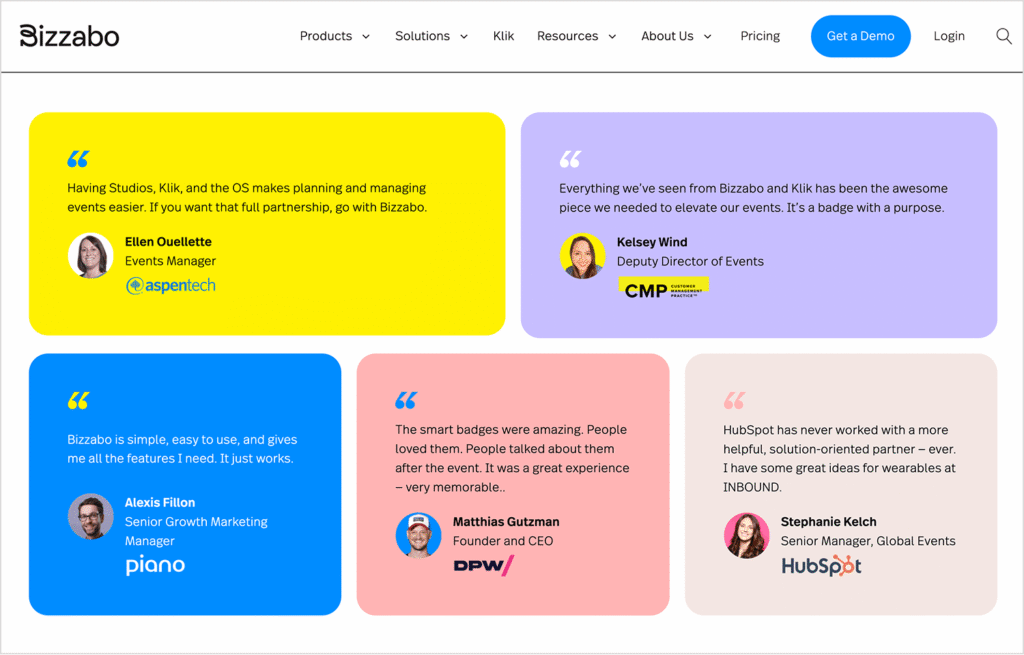
A compelling example comes from Basecamp’s approach to social proof. Rather than generic testimonials, they showcase specific results: “We increased our productivity by 35% after switching to Basecamp.” This specificity makes the social proof more credible and actionable.
Implementation tip: Place social proof strategically throughout your funnel, not just on your homepage. Product pages, checkout processes, and even 404 error pages can benefit from well-placed testimonials.
2. Scarcity & Urgency: Leveraging Loss Aversion
Scarcity taps into one of our most fundamental psychological drivers: loss aversion. Research shows that people feel the pain of losing something twice as intensely as the pleasure of gaining the same thing. This is why limited-time offers can increase sales by up to 332% (ConversionXL).
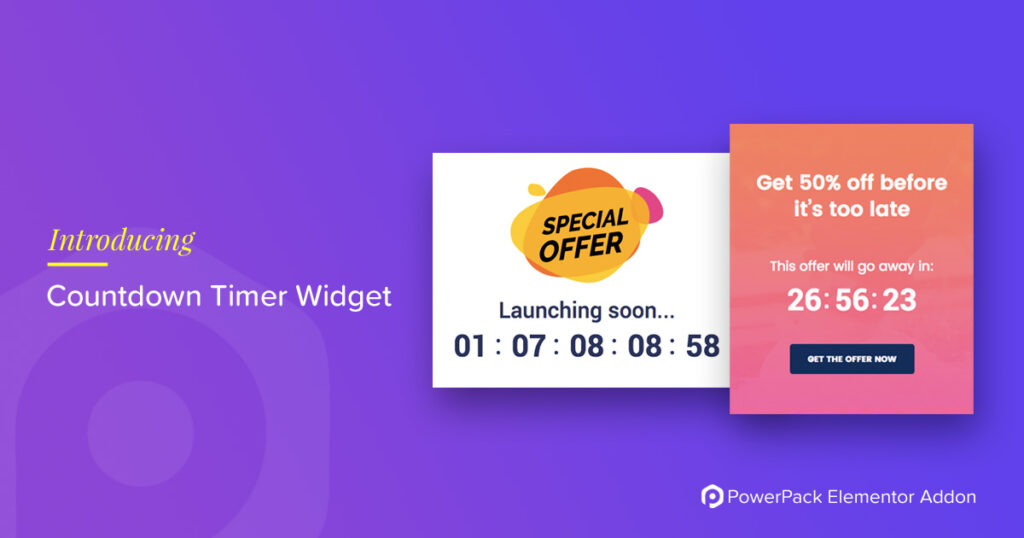
However, authenticity is crucial. Fake scarcity backfires spectacularly, damaging trust and brand reputation. Effective scarcity tactics include:
- Genuine limited inventory (“Only 3 items left in stock”)
- Time-sensitive offers with real expiration dates
- Limited enrollment for courses or services
- Seasonal availability for relevant products
Case study: Booking.com masterfully uses scarcity by showing “23 other people looking at this hotel” and “Booked 6 times in the last 6 hours.” These messages create urgency without being misleading, as they’re based on real user activity data.
3. Authority & Trust: Building Credibility That Converts
Authority bias causes people to assign more weight to the opinions of perceived experts. In the digital realm, trust signals serve as shortcuts to establishing authority. Sites with security badges see a conversion lift of 42% (Baymard Institute).
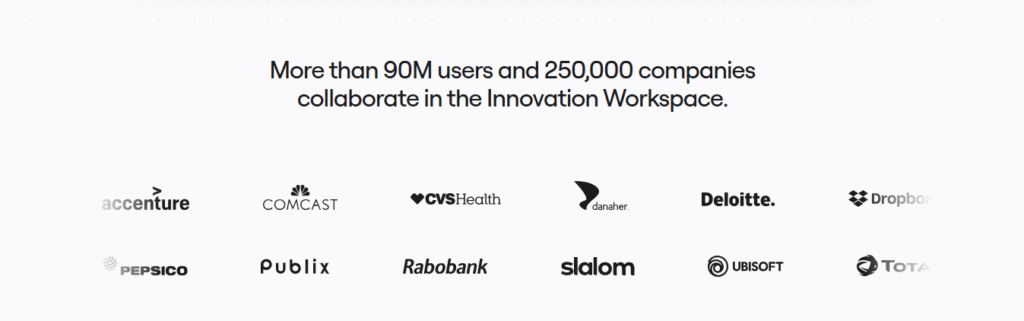
Essential trust elements include:
- Security badges (SSL certificates, payment security)
- Industry certifications and awards
- Media mentions and press coverage
- Professional associations and partnerships
- Expert endorsements from recognized authorities
- Money-back guarantees and clear return policies
The key is relevance; your trust signals should align with your audience’s concerns. B2B audiences might value industry certifications, while B2C customers might prioritize return policies and payment security.
4. Reciprocity: The Psychology of Give and Take
The reciprocity principle suggests that people feel obligated to return favors. In conversion optimization, this translates to providing value before asking for something in return. Free samples can boost sales by up to 2000% in retail (NY Times).
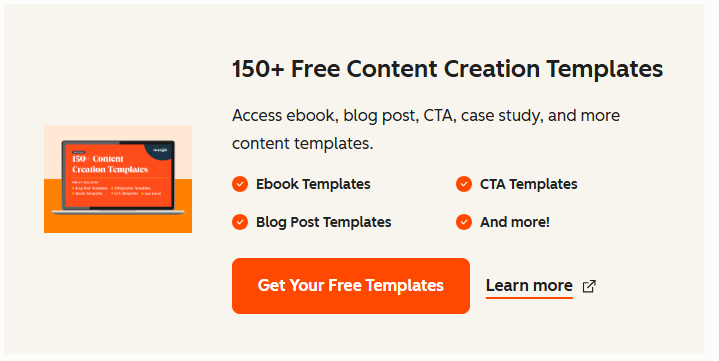
Effective reciprocity strategies include:
- High-value lead magnets (guides, templates, tools)
- Free trial periods with full feature access
- Complimentary consultations or audits
- Educational content that solves real problems
- Free shipping or bonus items
Pro tip: The perceived value of your free offering often matters more than the actual cost to provide it. A comprehensive guide that costs you $50 to produce might be perceived as worth $500 by your target audience.
5. Commitment & Consistency: The Foot-in-the-Door Effect
People have a strong desire to appear consistent with their previous actions and commitments. This psychological principle means that users are 31% more likely to complete a purchase after adding a small item to the cart first.
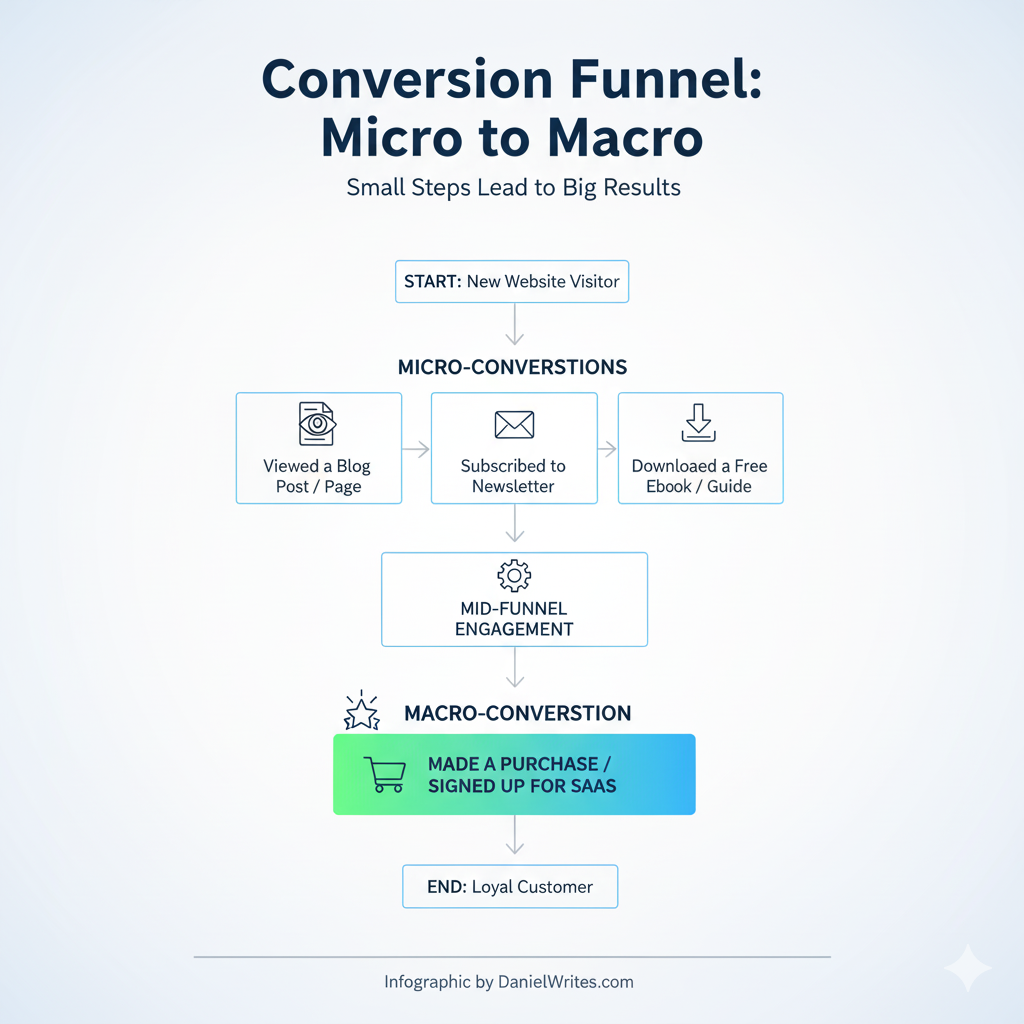
Effective commitment and consistency strategies:
- Progressive profiling that gathers information gradually
- Multi-step opt-ins that increase completion rates
- Micro-conversions that build toward larger goals
- Public commitments through social sharing
- Preference centers where users make choices
Example: Netflix’s onboarding process brilliantly uses this principle. They start with simple questions about viewing preferences, then gradually build toward the subscription commitment. Each small “yes” makes the final “yes” more likely.
6. Cognitive Ease & Design Simplicity: Reducing Mental Friction
When faced with complex decisions or interfaces, users often abandon the process entirely. Reducing checkout form fields from 11 to 4 increased conversions by 160% (Unbounce). This demonstrates the power of cognitive ease, making decisions feel effortless.
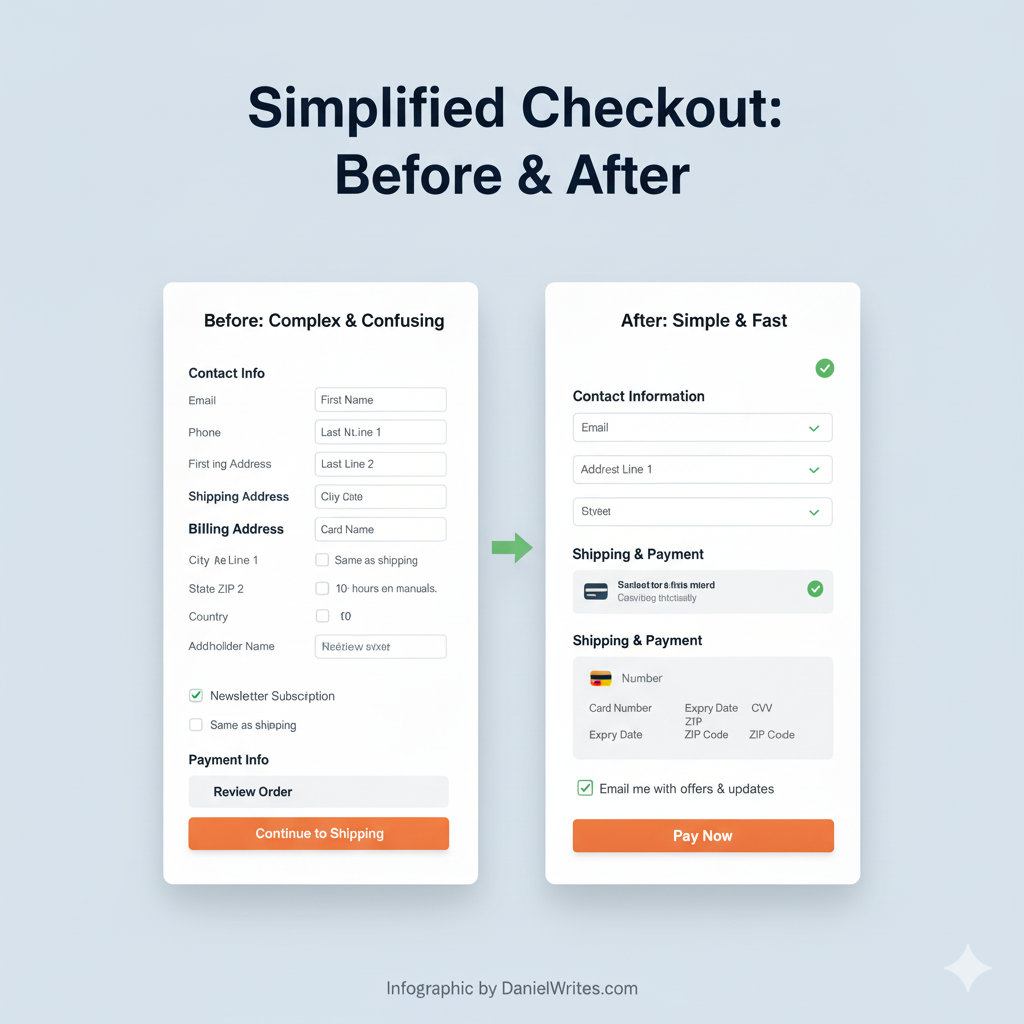
Design principles for cognitive ease:
- Clear visual hierarchy with obvious next steps
- Minimal form fields requesting only essential information
- Progress indicators for multi-step processes
- Single-column layouts that guide the eye naturally
- Obvious call-to-action buttons with contrasting colors
- Consistent navigation that doesn’t require learning
Remember: every additional choice, field, or step you add reduces the likelihood of conversion. Embrace minimalism not just for aesthetics, but for psychology.
Real-World Case Studies
Case Study 1: Amazon’s Psychological Mastery
Challenge: Converting browsers into buyers in a crowded e-commerce landscape.
Psychological Principles Applied:
- Social Proof: Customer reviews, ratings, and “customers who bought this item also bought”
- Urgency: “Order within X hours for next-day delivery”
- Authority: “Amazon’s Choice” badges and expert reviews
- Cognitive Ease: One-click purchasing and streamlined checkout
Results: Amazon’s conversion rate consistently outperforms industry averages, with Prime members converting at nearly 75% compared to the e-commerce average of 2-3%.
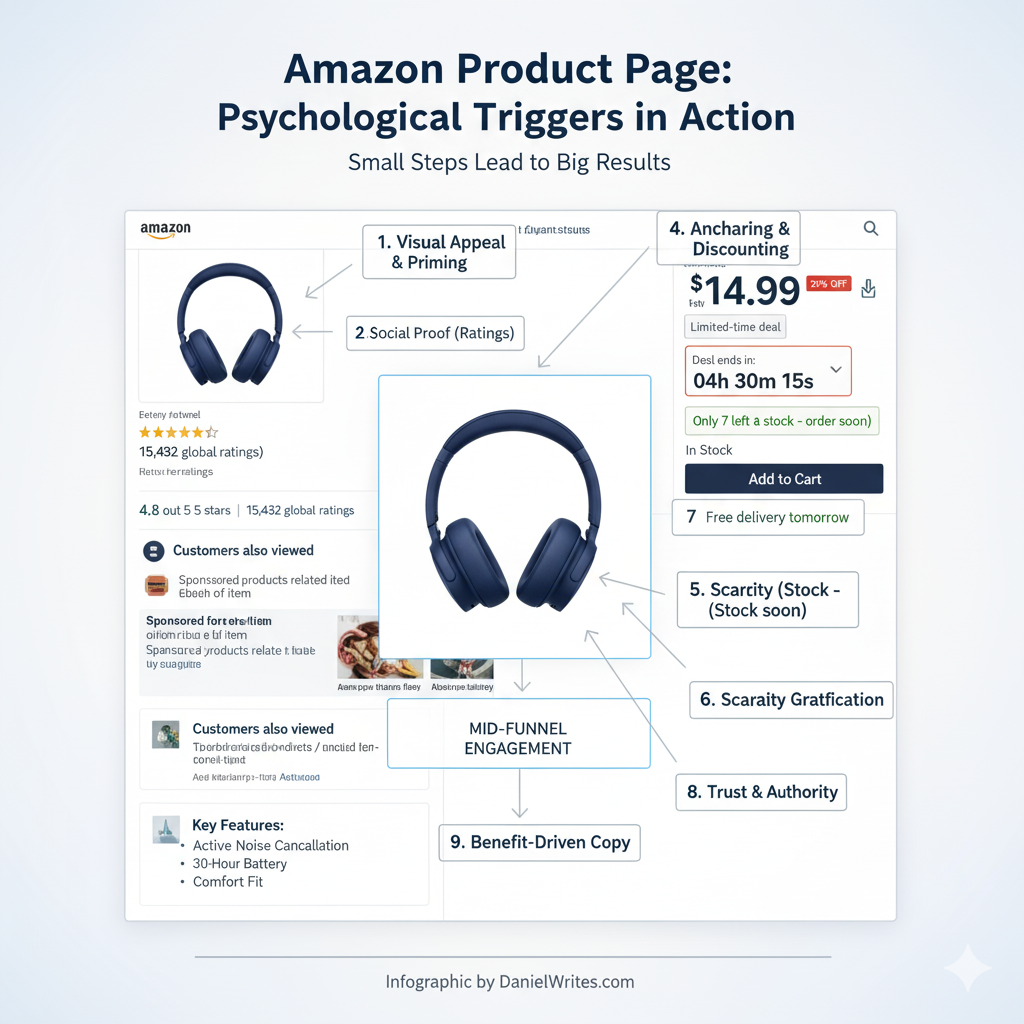
Key Takeaway: Amazon layers multiple psychological triggers without overwhelming the user, creating a seamless path to purchase.
Case Study 2: Airbnb’s Trust-First Approach
Challenge: Convincing people to stay in strangers’ homes instead of traditional hotels.
Psychological Principles Applied:
- Social Proof: Extensive review systems and host verification
- Authority: Professional photography and “Superhost” badges
- Reciprocity: Detailed host profiles and local recommendations
- Cognitive Ease: Intuitive search and booking process
Results: Airbnb has achieved a booking conversion rate of approximately 5-6%, significantly higher than many travel booking sites.
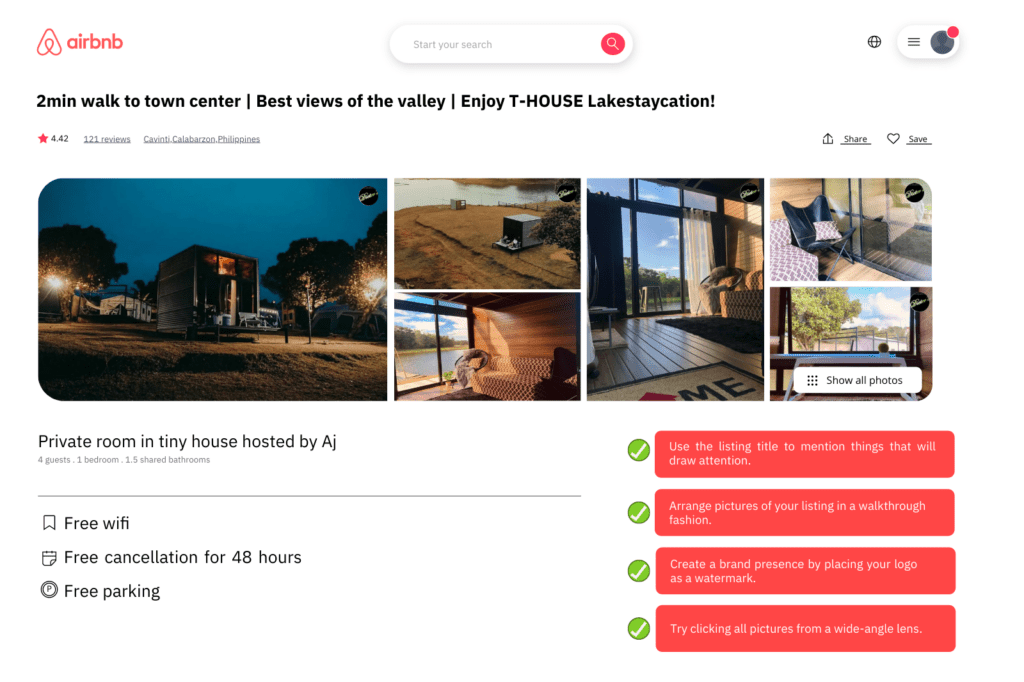
Key Takeaway: When your business model requires high trust, invest heavily in social proof and authority signals.
Case Study 3: HubSpot’s Lead Generation Optimization
Challenge: Converting website visitors into marketing-qualified leads.
A/B Test: Changed headline from “Get More Leads” to “Get More Sales-Ready Leads”
Psychological Principle: Specificity and outcome-focused messaging that addresses the real desired outcome (sales, not just leads).
Results: 37% increase in conversion rate from this single headline change.
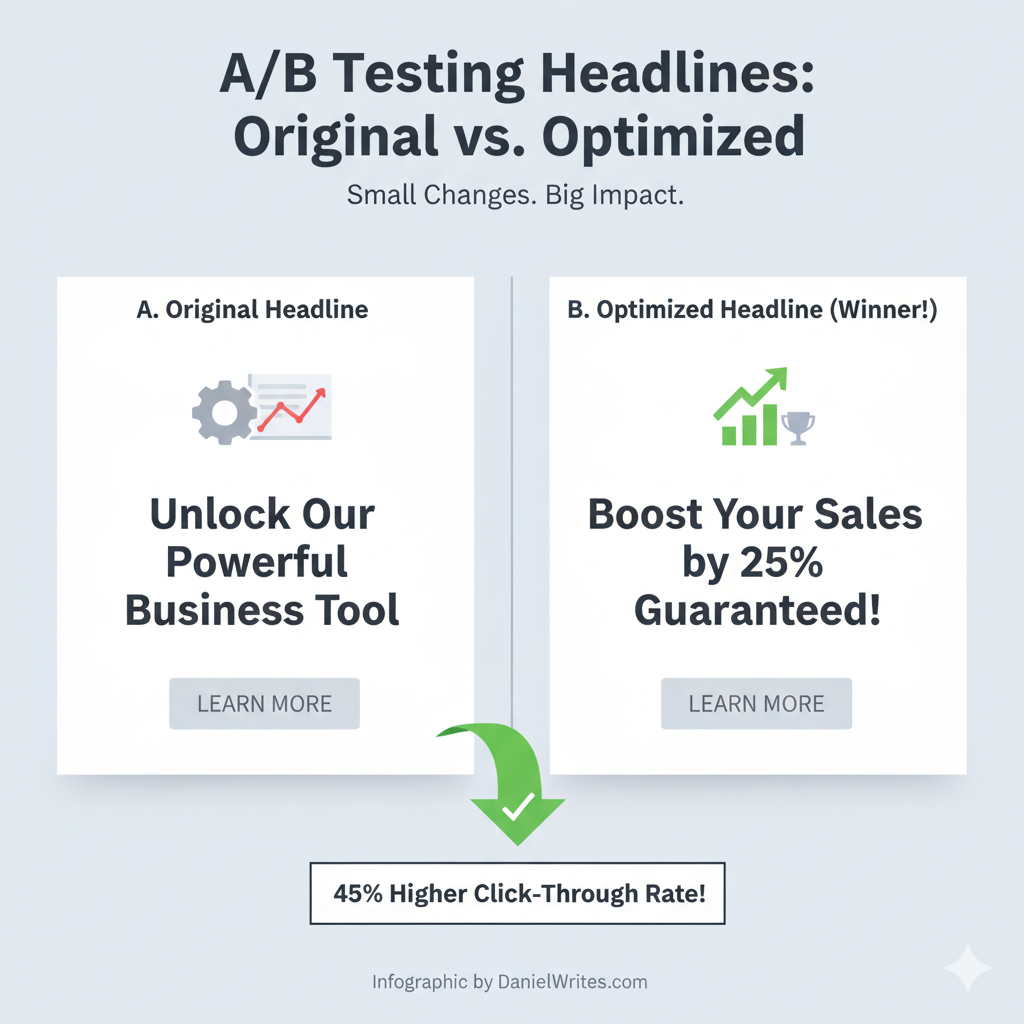
Key Takeaway: Small changes in messaging that better align with user psychology can yield significant results.
Stats & Research-Backed Insights
Understanding industry benchmarks helps put your conversion efforts in perspective. Here are key statistics every conversion optimizer should know:
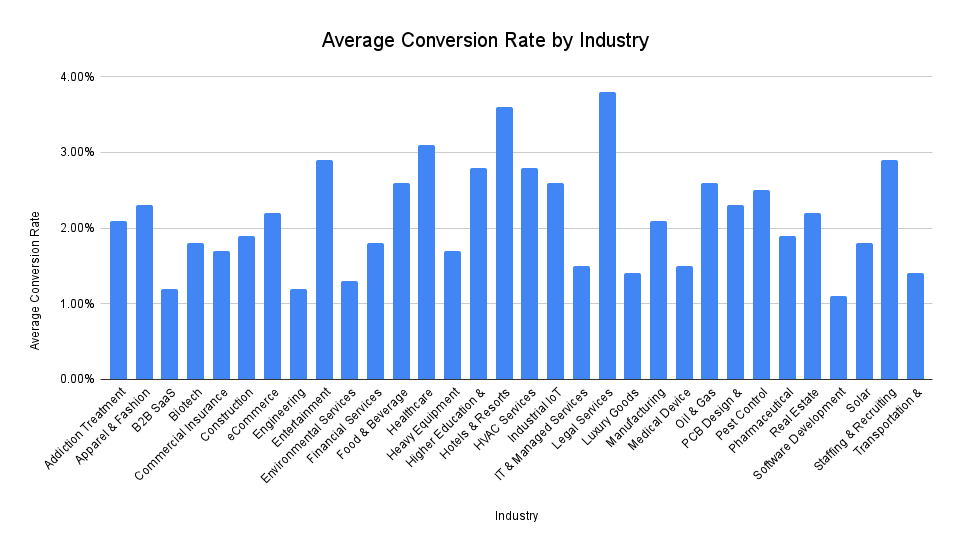
Industry Conversion Rate Benchmarks
- E-commerce: 2.86% average (WordStream)
- Lead generation: 2.35% average, top 25% convert at 5.31%+ (WordStream)
- SaaS: 3-7% for free trial signups (FirstPageSage)
- B2B services: 2-5% typical range (HubSpot)
Mobile vs. Desktop Performance:
- Mobile accounts for 58% of all online visits but only 42% of conversions (Adobe)
- Mobile conversion rates are improving but still lag desktop by 1-2%
- Progressive Web Apps show 2x higher mobile conversion rates
Form Optimization Impact:
- Removing one form field can increase conversions by 26% (Unbounce)
- Multi-step forms convert 86% better than single-step forms for complex purchases (Venture Harbour)
- Adding form field labels increases completion by 33% (CXL)
Trust Signal Effectiveness:
- Customer testimonials can increase conversions by 34% (BigCommerce)
- Product videos increase purchase likelihood by 85% (Wyzowl)
- Live chat availability increases conversions by 20% (Kayako)
[Insert image suggestion: Data visualization showing the conversion impact of different psychological triggers]
These statistics reinforce that conversion optimization isn’t about dramatic overhauls; it’s about understanding human psychology and making strategic improvements based on proven principles.
How to Apply Conversion Psychology in Your Business
It’s one thing to know about social proof, scarcity, or trust signals — it’s another thing entirely to weave them into your funnel in a way that measurably boosts conversions. Most businesses fail because they apply random tactics without understanding their audience’s unique psychological drivers. The framework below shows you how to apply conversion psychology with precision, prioritize what matters, and test improvements scientifically.
[Image suggestion: Step-by-step infographic showing the conversion psychology implementation process]
Step 1: Audit Your Current Funnel
Intro: Every optimization journey starts with a reality check. Before you add shiny new tactics, you need to see where you stand.
Start by evaluating your existing conversion elements against proven psychological principles. Use this checklist to uncover gaps and opportunities:
Social Proof Elements:
- □ Customer testimonials with photos and specific results
- □ Review systems on key pages
- □ User counts or social media followers displayed
- □ Case studies easily accessible
Trust and Authority Signals:
- □ Security badges visible during checkout
- □ Industry certifications and awards displayed
- □ Clear contact information and policies
- □ Professional design and error-free copy
Scarcity and Urgency Indicators:
- □ Genuine limited-time offers
- □ Real inventory levels shown
- □ Accurate deadline countdowns
- □ Appropriate urgency without manipulation
Cognitive Ease Assessment:
- □ Minimal steps in conversion process
- □ Forms request only essential information
- □ Clear next steps throughout user journey
- □ Design naturally guides toward conversion
Step 2: Prioritize Based on Impact vs. Effort
Intro: Not all changes are created equal — some tweaks move the needle immediately, while others eat up resources without much payoff. The trick is knowing where to invest first.
Use this impact vs. effort matrix to decide what to tackle:
High Impact, Low Effort (Do First):
- Add customer testimonials to key pages
- Simplify form fields
- Improve call-to-action button design
- Add trust badges to checkout
High Impact, High Effort (Plan Carefully):
- Comprehensive site redesign for cognitive ease
- Implement advanced personalization
- Develop video testimonials
- Create interactive product demos
Low Impact, Low Effort (Quick Wins):
- Update button colors for contrast
- Add progress indicators to multi-step forms
- Include social media follower counts
- Optimize page load speeds
Low Impact, High Effort (Avoid):
- Complex gamification systems
- Extensive A/B tests on minor elements
- Over-engineered personalization
- Unnecessary feature additions
Step 3: Run Strategic A/B Tests
Intro: Psychology is powerful, but it’s still a hypothesis until you validate it with data. That’s where testing comes in.
Testing Framework:
- Hypothesis Formation:
- “We believe that [specific change] will [expected result] because [psychological principle].”
- Example: “We believe that adding customer testimonials to our pricing page will increase conversions by 15% because social proof reduces purchase anxiety.”
- Test Design:
- Run tests for full business cycles (usually 2–4 weeks)
- Use adequate sample sizes (minimum 100 conversions per variation)
- Test one variable at a time for clarity
- Implementation:
- Start with high-impact, low-effort changes to build momentum and learn about your audience’s psychology.
Step 4: Use Analytics to Validate Psychological Assumptions
Intro: Numbers don’t lie — they reveal whether your audience’s behavior actually matches the psychological principles you’ve applied.
Key Metrics to Track:
- Conversion rate by traffic source, device, and user segment
- Time on page and bounce rate to measure engagement
- Form abandonment rates to spot friction points
- Heat maps to understand visual attention patterns
- User session recordings to observe actual behavior
Tools for Psychological Insights:
- Google Analytics → behavioral flow analysis
- Hotjar or Crazy Egg → heat maps & session recordings
- Optimizely or VWO → structured A/B testing
- Typeform or Calendly → tracking micro-conversions
Step 5: Iterate and Scale
Converting psychology isn’t a “set it and forget it” strategy—it requires continuous refinement based on user behavior and market changes. As your understanding deepens, you can create increasingly sophisticated psychological experiences that drive better results.
Conversion psychology isn’t a one-time implementation—it’s an ongoing optimization process. As you learn more about your specific audience’s psychological triggers, you can:
- Personalize experiences based on user behavior and preferences
- Segment tests by audience characteristics
- Layer psychological triggers for compound effects
- Expand successful principles to new pages and campaigns
Common Mistakes to Avoid
Even with good intentions, conversion psychology can backfire if implemented incorrectly. Here are the most common pitfalls:
The Paradox of Choice Trap
Offering too many options can overwhelm users and reduce conversions. Psychologist Barry Schwartz’s research shows that beyond a certain point, additional choices create anxiety rather than satisfaction.
Common Mistakes:
- Displaying 20+ product variations on a single page
- Offering multiple pricing tiers without clear differentiation
- Creating complex navigation menus with dozens of options
- Providing too many ways to contact or engage
Solution: Use the “Rule of Three” where possible. Present 3 main options, with one clearly positioned as the recommended choice.
[Insert image suggestion: Examples of overwhelming choice vs. simplified choice architecture]
Fake Scarcity and Social Proof Backfire
Using misleading urgency tactics or fabricated social proof can permanently damage trust and brand reputation.
Red Flags:
- Countdown timers that reset when the page refreshes
- “Only 2 left in stock” messages that never change
- Fake user counts or testimonials
- Generic review quotes without attribution
Ethical Alternative: Build genuine scarcity through limited production runs, seasonal offers, or exclusive access programs. Use real customer data for social proof, even if the numbers seem smaller.
Mobile Optimization Neglect
With mobile accounting for 58% of all online visits but only 42% of conversions, mobile psychological optimization is crucial.
Mobile-Specific Considerations:
- Thumb-friendly design: Place call-to-action buttons within easy thumb reach
- Simplified forms: Use fewer fields and smart form features (auto-fill, dropdown menus)
- Faster loading: Mobile users are more impatient—optimize for speed
- Larger trust signals: Security badges and testimonials should be easily visible on small screens
Over-Engineering Psychology
Some marketers become so focused on psychological triggers that they create overly complex experiences that confuse rather than convert.
Warning Signs:
- Using every psychological principle on every page
- Creating convoluted user journeys to incorporate more triggers
- Overwhelming users with multiple calls-to-action
- Focusing on tactics over genuine user value
Balance Strategy: Start with 2-3 core psychological principles that align with your audience’s primary concerns, then layer additional elements gradually based on testing results.
[Insert image suggestion: Clean, simple landing page design showing effective psychological principles without overwhelming users]
Advanced Psychological Strategies
Once you’ve mastered the fundamentals, these advanced techniques can further optimize conversions:
Emotional Progression Mapping
Map the emotional journey users experience throughout your conversion funnel, then design touchpoints that address each emotional state:
- Awareness Stage: Curiosity and interest
- Consideration Stage: Comparison anxiety and feature concern
- Decision Stage: Purchase anxiety and commitment fear
- Post-Purchase: Satisfaction and potential buyer’s remorse
Psychological Personalization
Use behavioral data to customize psychological triggers for different user segments:
- First-time visitors: Focus on trust signals and social proof
- Returning visitors: Emphasize scarcity and special offers
- Cart abandoners: Use reciprocity and commitment consistency
- High-value prospects: Leverage authority and exclusivity
Neuro-Linguistic Programming (NLP) in Copy
Use language patterns that speak directly to subconscious decision-making:
- Sensory language: “See how easy it is,” “Feel the difference,” “Hear what customers say”
- Presupposition patterns: “When you implement these strategies…” (assumes they will)
- Embedded commands: “You might find yourself clicking the button below”
Measuring Long-Term Psychological Impact
Beyond immediate conversion rates, track these metrics to understand the long-term effectiveness of psychological strategies:
Customer Lifetime Value (CLV): Are psychologically-optimized conversions leading to more valuable long-term customers?
Brand Trust Metrics: Monitor reviews, social media sentiment, and customer satisfaction scores to ensure psychological tactics enhance rather than erode trust.
Repeat Conversion Rates: Do customers who convert through psychologically-optimized funnels return for additional purchases?
Referral Rates: Satisfied customers become advocates. Track whether your psychological approach increases word-of-mouth recommendations.
[Insert image suggestion: Dashboard showing long-term customer value metrics and brand health indicators]
Conclusion
Conversion psychology isn’t about manipulating users—it’s about understanding how people naturally make decisions and creating experiences that align with those mental processes. The most successful businesses recognize that behind every click, signup, and purchase is a human being navigating uncertainty, comparing options, and seeking reassurance.
The psychological triggers we’ve explored—social proof, scarcity, authority, reciprocity, consistency, and cognitive ease—work because they address fundamental human needs: the need for social acceptance, the fear of missing out, the desire for expert guidance, the appreciation for value, the drive for consistency, and the preference for simplicity.
Key Takeaways:
- Start with Trust: Before any psychological trigger can work, users must trust your brand and website
- Test Systematically: Every audience is different—validate psychological assumptions with data
- Layer Gradually: Implement psychological principles progressively rather than all at once
- Maintain Authenticity: Genuine psychological triggers outperform fake ones every time
- Focus on Value: The best conversions happen when psychological optimization enhances genuine value
Your Next Steps:
Begin with our conversion psychology audit checklist. Identify the top three psychological gaps in your current funnel, prioritize them using our impact/effort matrix, and implement one change this week. Remember, conversion optimization is a marathon, not a sprint—small, consistent improvements compound over time.
The businesses that thrive in our attention-scarce economy won’t be those with the largest budgets or the most features. They’ll be the ones who understand what moves the psychological needle and create experiences that naturally guide users toward beneficial actions.
Ready to transform your conversions through psychology? Start your funnel audit today and discover what psychological triggers will move the needle for your specific audience.
References and Citations
- Gomez Web Performance Study – User experience and site abandonment statistics
- Nielsen Global Trust in Advertising Report – Consumer trust and recommendation statistics
- ConversionXL Urgency Research – Scarcity and urgency impact studies
- Baymard Institute Cart Abandonment Studies – Trust signals and security badge impact
- New York Times Retail Sampling Article – Free sample effectiveness research
- Unbounce Form Optimization Study – Form field reduction impact
- WordStream Conversion Rate Benchmarks – Industry conversion rate averages
- Adobe Digital Marketing Report – Mobile vs desktop performance statistics
- HubSpot Marketing Statistics – B2B conversion benchmarks and optimization data
- Kahneman, D. “Thinking, Fast and Slow” – Behavioral economics and decision-making research
Additional Resources
- Conversion Rate Optimization Tools Comparison – Comprehensive guide to testing and analytics platforms
- Landing Page Psychology Checklist – Downloadable audit template for psychological optimization
- A/B Testing Statistical Significance Calculator – Ensure your tests reach valid conclusions
- Customer Psychology Survey Templates – Understand your audience’s psychological drivers
- Mobile Conversion Optimization Guide – Psychology-focused mobile experience optimization