B2B Audience Psychology: What Resonate’s With Them
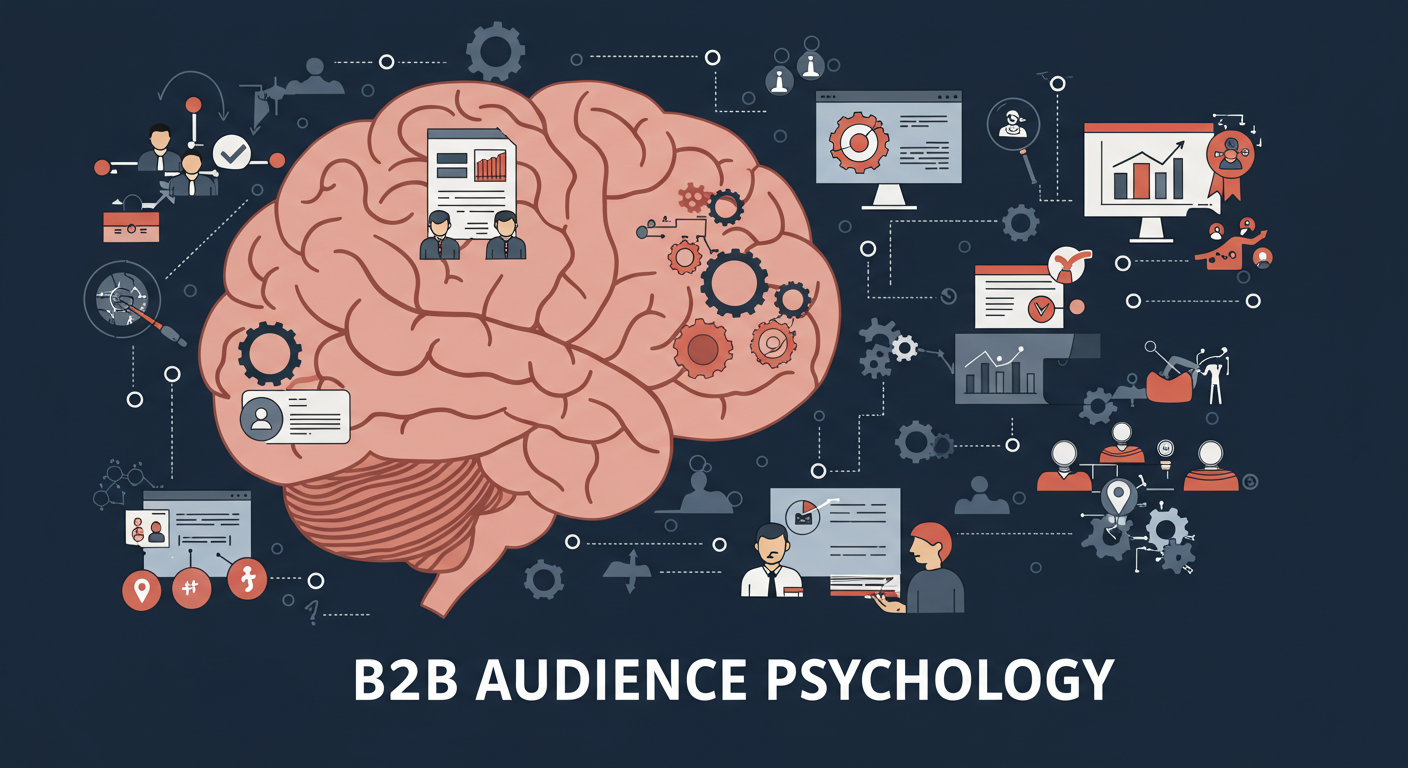
B2B marketers often assume their audience is purely logical, that decisions hinge on metrics, projections, and ROI spreadsheets. But beneath every email and spreadsheet is a human being making choices influenced by pressure, pride, ambition, and risk.
It’s the VP of Marketing who doesn’t want to look foolish recommending who he thinks might be the wrong vendor.
The CFO who needs confidence that every dollar is defensible.
The IT director who values credibility over creativity.
Behind the corporate titles are people, and understanding how they think is the most underrated competitive edge in B2B marketing.
That’s what this post is about: understanding the real why behind what drives B2B buyers to act, trust, and commit.
What This Post Covers
Here’s a quick look at what you’ll learn in this post:
- Final Takeaway: How to integrate psychology into your strategy to build trust and accelerate decisions naturally.
- The Core of B2B Audience Psychology: Why logic alone doesn’t drive decisions (and how emotion quietly influences decision).
- The Three Classical Pillars of B2B Persuasion: How to use ethos, pathos, and logos to turn content into conversion assets.
- The 6 Psychological Triggers That Move Decision-Makers: The exact mental cues that make your offers feel safer, smarter, and more valuable.
- B2B Content Formats That Convert: How to apply these psychological triggers across emails, landing pages, whitepapers, and more.
- Actionable B2B Writing Frameworks: Real examples of turning logic into persuasion without losing your brand’s professional credibility.
Despite the psychological effects, B2B audiences are not a typical impulse buyers like B2C audience they’re business decision makers driven by results. So they try to tie where their money goes to performance, ROI, and credibility. That’s why the way you present your content is what matters the most, offering a clear message that follows a pschological order to present what they want, strengthens their intent to buy rather than being purely logical like you are trying to convince a bot.
Here is an analogical example:
Two SaaS companies were competing for the same enterprise client, a logistics firm struggling with delays in its delivery tracking system. Both vendors offered similar solutions: cloud-based software, real-time tracking, same pricing model, and nearly identical ROI projections.
Company A focused on the product. Their presentation was clean and data-heavy, full of feature comparisons, performance charts, and integration specs. They led with logic, showing exactly how their tool worked and why it was technically superior.
Company B, on the other hand, started with context. Before the pitch, they’d spoken with a few team members to understand their real problem. They discovered that delays in the tracking system triggered angry calls from customers who were affected which in turn put pressure on the operations manager, who had to defend these failures in weekly executive reviews.
So instead of opening with features, Company B has already done their home works to idtenity the problemen the companie is currently facing, so they opened with a relatable story. They painted a picture of how their solution could help the manager reduce complaints, save time in reporting, and rebuild trust across departments. Then they showed the same data and ROI numbers as Company A, but framed them as outcomes rather than features.
A month later, Company A was still waiting for a reply. Company B closed the deal.
Same offer. Same logic. Same ROI.
The difference? Company B followed a relevant and a personalized procedure, framing the company’s current problem in a way that is tied to their solution framed as a relatable story or scenerio. So what I personaly understand here is that no matter what you offer you should ultimately try to understand your audience real problems and present it as a a reletable stroy tied to your offering as the solution. This is stronger than purely being logical and straightforward.
Even though it seems that B2B audiences are purely driven by logical justification, Harvard Business Review found that emotional factors still account for up to 3x more impact than rational factors in B2B decision-making. This creates the fundamental B2B paradox: ignited by logical justification (logos), and very much influenced by emotional signals tied to what they care about.
The Three Pillars of B2B Persuasion
Before I dive into the specific psychological triggers that move the needle, below are the three classical elements of persuasion that measurably work in B2B contexts that goes far back during the time of Aristotle:
1. Ethos (Credibility & Authority)
In B2B, ethos isn’t just about being trustworthy; it’s about being the definitive expert that stakeholders can confidently recommend to their colleagues and superiors. This includes industry certifications, thought leadership, client testimonials from recognizable brands, and demonstrable expertise. Authentic credibility builds lasting business relationships and sustainable growth.
2. Pathos (Emotional Resonance)
B2B pathos targets professional emotions: the fear of making career-limiting decisions, the ambition to drive company growth, the frustration with current inefficiencies just like my earlier analogy, and the desire to be seen as innovative.
3. Logos (Logical Framework)
B2B logos require bulletproof reasoning supported by data, case studies, ROI calculations, and risk assessments. It’s not enough to be logical; the logic must be defensible to multiple stakeholders and auditable by finance teams.
B2B Psychological Triggers That Drive Decision-Making
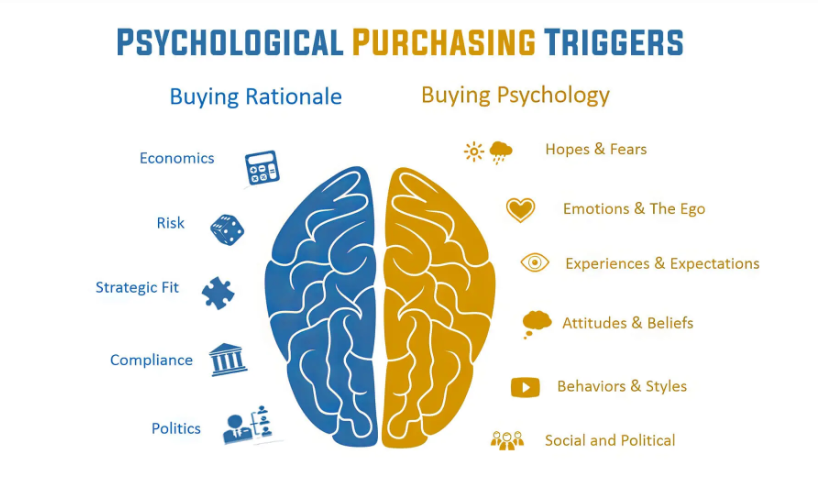
1. Logic & ROI Justification (Logos-Driven)
B2B decisions must be defendable to stakeholders, superiors, and budgets, just like I said earlier. Decision-makers need concrete data, metrics, and projections to justify their choices internally. This isn’t just about having good numbers; it’s about presenting them in ways that make the ROI undeniable and the decision defensible.
How this applies in practice: When content includes specific ROI projections backed by verifiable data, decision-makers gain the ammunition needed to defend their choices internally. Strong metrics make the business case undeniable and reduce internal friction during approval processes.
2. Authority & Credibility (Ethos-Focused)
B2B buyers need proof of competency before committing significant budgets or reputations. They’re not just buying a product; they’re betting on your ability to deliver results. Industry certifications, expert endorsements, and thought leadership content over time establish this credibility that reduces perceived risk on commitment.
Here’s how it applies (Ethos): When your content includes industry awards, expert testimonials, or thought leadership pieces, you’re providing stakeholders the credibility signals they need to feel confident in their vendor selection. The stronger your demonstrated competence, the lower the perceived risk for decision-makers who must defend their choices internally.”
3. Risk Reduction (Pathos + Logos Combined)
B2B buyers fear making wrong choices that could damage their reputation or career, so they play safe, and follow vetted options with proven track records. Free trials, guarantees, and extensive social proof help minimize perceived risk and make the “yes” decision easier.
How this works in practice: Risk reduction strategies like trials, guarantees, and social proof demonstrate vendor confidence while providing logical justification for stakeholder decisions. This combination of evidence and reassurance facilitates confident commitment and this works really well even for B2C audience.
4. Clarity Over Creativity (Logos-Optimized)
B2B buyers prefer concise, benefit-driven messaging over creative campaigns. They’re busy professionals who need to quickly understand value propositions and communicate them to others. Clear, jargon-free communication that focuses on business outcomes wins over clever wordplay. This is logos in its purest form; clear reasoning that’s easy to follow and share.
Here’s how this applies (Logos): Leading with clear benefits, cutting out the jargon, and presenting information in bullet points in an easy way to scan and find what they need. Your message becomes crystal clear, and decision-making also becomes more likely than not.
5. Scarcity and Urgency (Pathos-Driven)
Limited-time offers or exclusive insights create FOMO (fear of missing out), accelerating decisions in environments where buyers are likey to delay. B2B scarcity works differently than B2C; it’s about exclusive access, limited consulting capacity, or first-mover advantages rather than inventory limitations. This also taps into the pathos of professional ambition and competitive advantage.
Here’s how it applies (Pathos): As a B2C audience you’ve probably seen it on Amazon or Walmart: “Only 3 left in stock.” That little line makes people move faster, because it signals exclusivity and scarcity. The same psychology works in B2B, just on a different scenrio. When I position a solution as limited, like offering exclusive consulting spots, a pilot program with capped seats, or early access to a feature, it taps into that same urgency. It’s not about manipulation; it’s about creating the sense that this is a rare opportunity reserved for those who act decisively. And in B2B, exclusivity often means influence, advantage, and status for the decision-maker who grabs it.
6. Future-Proofing (Ethos + Logos Integration)
B2B buyers also think long-term and want solutions that will remain valuable as their business grows, as they may require more capabilities & features. They’re not just solving today’s problems; they’re also investing in their ability to be consistently relevant. Content that addresses scalability, adaptability, and long-term ROI resonates strongly by combining credible expertise tied to the business’s long-term growth agenda.
Here’s how it applies (Ethos + Logos): When your content emphasizes how your solution helps them scale and adapt the ever-changing business landscape, they’ll understand you’re not just offering a quick fix, but an investment that grows with them. This further strengthens their confidence in your solution and makes them feel your offering is worth their investment; that’s exactly the kind of decision B2B leaders feel confident defending to their team.
B2B Content Types That Convert
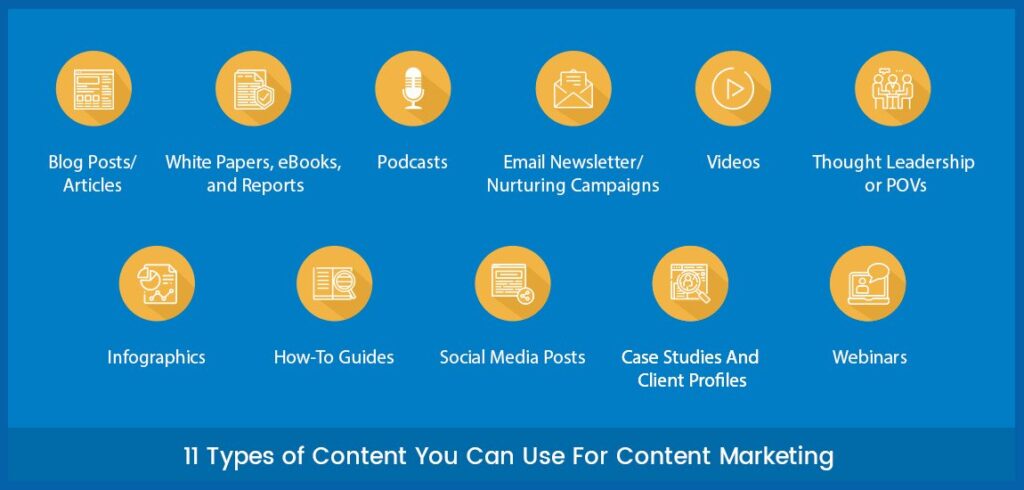
1. Educational Content (Blog Posts, Whitepapers, Industry Reports)
Intent: Establish thought leadership and provide valuable insights that nurture prospects through their buying journey
Examples: McKinsey’s industry insights, HubSpot’s marketing guides, Salesforce’s Trailhead learning platform
Psychological Triggers That Work: Authority building, expertise demonstration, trust development
Common Sample: “5 Marketing Trends for 2025. Marketing is always evolving. Here are some trends we’re seeing:
- AI integration
- Personalization
- Video content
- Social commerce
Sustainability focus: These trends will impact how businesses market in the coming year.”
Strategic Sample: “The Hidden Cost of Marketing Attribution: Why 67% of B2B Companies Are Measuring Success Wrong.” McKinsey research shows that companies using advanced attribution modeling see 15-20% improvement in marketing ROI. Yet most B2B marketers are still relying on last-touch attribution that credits success to the final interaction, missing 80% of the customer journey.
Here’s what leading companies do differently: instead of giving all the credit to the last thing a customer clicks on (like a demo request form), they look at the whole journey. For example, a company might notice that most of their best customers first read a blog post, then attend a webinar, and only later book a demo. By tracking all those touchpoints, they realize the blog and webinar deserve just as much credit as the final demo request. With that insight, they can put more effort into creating high-quality content and webinars because they now know those steps play a big role in winning deals.
2. Product Descriptions & Datasheets
Intent: Communicate complex features in compelling, benefit-focused ways that address specific business challenges
Examples: Salesforce product pages, Microsoft Azure technical specifications, Adobe Creative Suite feature lists
Psychological Triggers That Work: Logic & ROI justification, risk reduction, clarity over creativity
Common Sample: “Enterprise CRM Software Features:
- Contact management
- Lead scoring
- Email integration
- Reporting dashboard
- Mobile app access
- 99.9% uptime guarantee starting at $45/user/month.”
Strategic Sample: “Transform Chaotic Lead Management Into Predictable Revenue Growth. Stop losing qualified leads to disorganized follow-ups. Our Enterprise CRM eliminates the chaos that can lead to thousands, if not millions, in lost sales.
Proven Results:
- TechCorp increased close rates by 34% in 90 days
- Manufacturing Plus reduced the sales cycle by 23%
- ServicePro achieved 156% of quota (previously at 89%)
Risk-Free Implementation: 30-day money-back guarantee + free data migration + dedicated success manager. Join 15,000+ companies who rely on our 99.9% uptime SLA.”
How Psychology Applies: Addresses specific pain points to let them know you understand their problem or frustration, backed with concrete ROI data and case studies, including social proof from similar companies, and offering a risk-free trial to reduce decision friction. All these increase the conversion rate drastically.
3. Email Campaigns & Newsletters
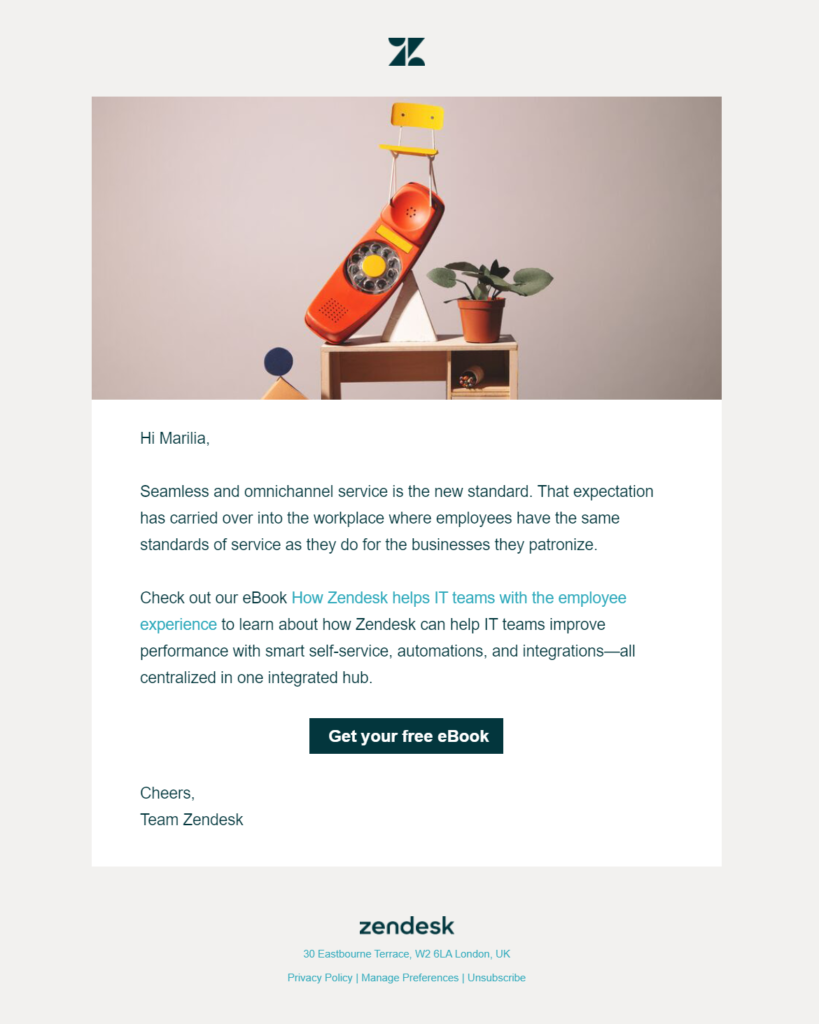
Intent: Nurture relationships and advance prospects through the sales funnel with valuable, personalized content.
Examples: Morning Brew for professionals, First Round Review, a16z newsletter
Psychological Triggers That Work: Authority building, consistency, personalized value delivery.
Common Sample: “Subject: Q4 Product Updates Hi Sarah, We’ve made some exciting updates to our platform this quarter:
- New dashboard design
- Faster load times
- Additional integrations
- Bug fixes and improvements. Learn more about these updates on our blog.”
Though this sounds simple and ok but it can be improved to work more effectively when it’s detailed.
Strategic Sample:
“Subject Line: Sarah, the metric that predicted TechCorp’s 40% revenue jump.
Hi Sarah,
Yesterday, we were analyzing why some of our clients see explosive growth while others plateau, and I discovered something fascinating.
Companies that track detailed metrics see 40% higher revenue growth than those that don’t. TechCorp started measuring their platform efficiency (ease of use) in January, and by December, the improvements they made helped them exceed their annual target by $2.8M.
The metric? Customer Effort Score correlation with expansion revenue.
Here’s the 5-minute analysis that changed everything for TechCorp: Most SaaS companies in the healthcare space focus on acquisition metrics, but TechCorp discovered that customers who rated interactions as “effortless” were 3x more likely to upgrade within 6 months. They started tracking how many steps it took customers to complete key actions in their platform. When they reduced average task completion from 8 clicks to 3 clicks, their expansion revenue jumped 67%, helping them exceed their annual target by $2.8M.
Key takeaway: when new customers find your platform effortless to use, they upgrade faster and stick longer, creating predictable growth.
This applies directly to your SaaS growth challenge we discussed last month. Worth a quick call to explore?
Best, Regards
(Name)
P.S. Only sharing this with 12 clients who could benefit most. Let me know if you’d like the complete framework.”
How Psychology Applies: I think that personalization in today’s marketing efforts is critical it shows you understand and care about the recipient’s needs. When people feel you’re speaking directly to them, they’re more likely to respond and eventually convert. The challenge is that researching every client takes time, so many businesses default to generic emails. That’s why just AI and automation tools alone are not good enough; a real person still needs to personalize and evaluate each message to make it relevant and effective for clients.
4. Website & Landing Page Copy
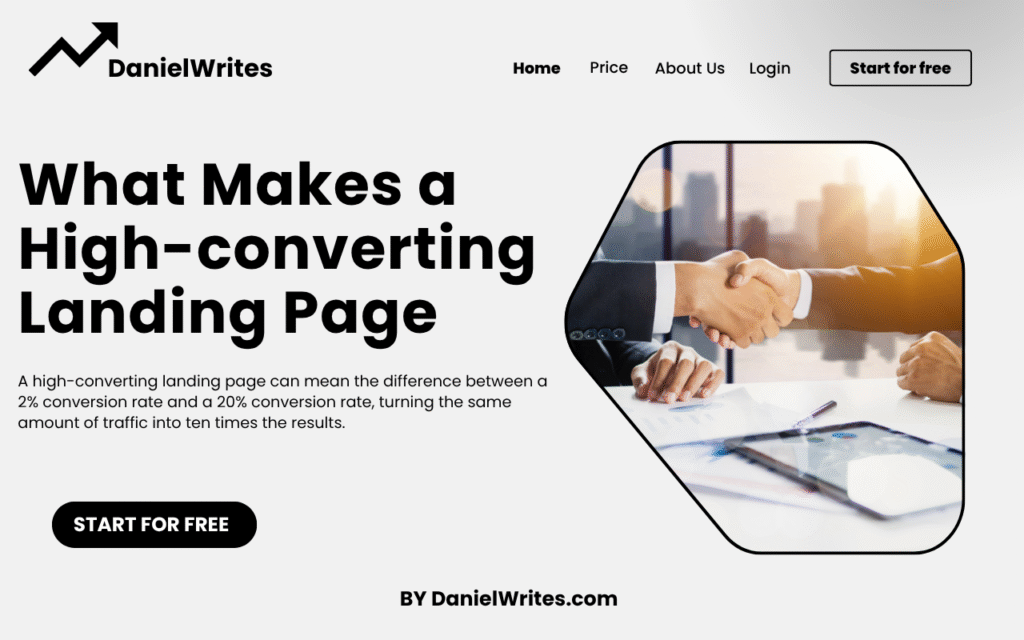
Intent: Convert visitors who land on this page through clear value propositions that address multiple stakeholder concerns
Examples: Zoom’s meeting solutions page, Slack’s team communication landing page, Asana’s project management homepage
Psychological Triggers That Work: Clarity over creativity, risk reduction, multiple proof points
Common Sample: “Project Management Software for Teams. Streamline your workflow with our easy-to-use project management platform. Features include task management, team collaboration, and progress tracking. Try free for 14 days.“
Strategic Sample:
“Finally, A Project Management Solution Your Entire C-Suite Will Love.
- For CEOs: Gain real-time visibility into project ROI and resource allocation
- For CTOs: Enterprise-grade security with seamless integrations.
- For CFOs: Reduce project overruns by 31% (average client result)
Trusted by 50,000+ teams at companies like Microsoft, Shopify, Airbnb, and more.
Results You Can Expect:
- 23% faster project completion (Verified by PwC audit)
- 67% reduction in status meeting time
- 89% team adoption rate within 30 days
Risk-Free Start: 14-day trial, no credit card required, free setup consultation included.”
Ending with a strong CTA, like the 14-day free trial or something applicable to your business, can significantly reduce friction.
How Psychology Applies: Addressing different stakeholder concerns makes the offer more personalized since it increases the chances that you’ll encounter the right audience. It reassures each stakeholder that you’ve successfully worked with diverse clients facing similar challenges. Pairing this with risk-free offers removes friction, like I said earlier, and makes the decision easier.
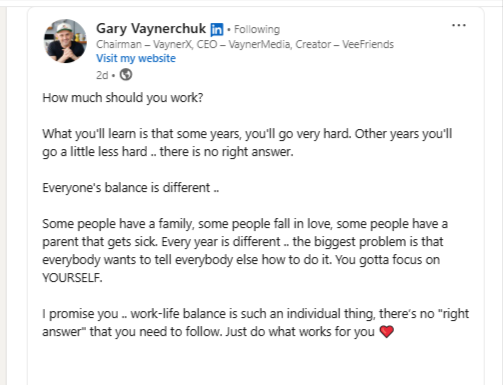
5. Social Media Content (LinkedIn-Focused)
Intent: Build brand awareness and thought leadership in professional networks
Examples: LinkedIn posts by industry leaders like Reid Hoffman, Satya Nadella’s leadership insights, and Gary Vaynerchuk’s business advice
Psychological Triggers That Work: Authority positioning, peer recognition, value-first approach
Common Sample: “Excited to announce our latest product update! New features include enhanced reporting and better user interface. Check it out and let us know what you think. #ProductUpdate #Innovation #Tech”
Strategic Sample: “The $2.3M mistake I see B2B companies make every quarter…
They optimize for MQLs instead of revenue.
Here’s what happened when we audited 47 SaaS companies: → High MQL companies: 2.3% close rate → High MQA companies: 12.8% close rate
MQA = Marketing Qualified Accounts (account-level scoring vs. lead-level)
The difference? MQA focuses on:
- Account intent signals
- Multi-stakeholder engagement
- Budget qualification upfront
One client switched from MQL to MQA tracking. Results in 90 days:
- 340% increase in sales-accepted leads
- 67% shorter sales cycles
- $2.3M additional revenue
The framework that made this possible: [Link to detailed case study]
What metrics are you optimizing for? 👇”
How Psychology Applies: Leads with attention-grabbing insight (pathos – creates curiosity and concern), provides specific data and methodology (backs this with logics “logos”), establishes thought leadership through valuable framework sharing (ethos), and encourages professional community engagement (pathos – desire for peer connection).
6. Press Releases & PR Content
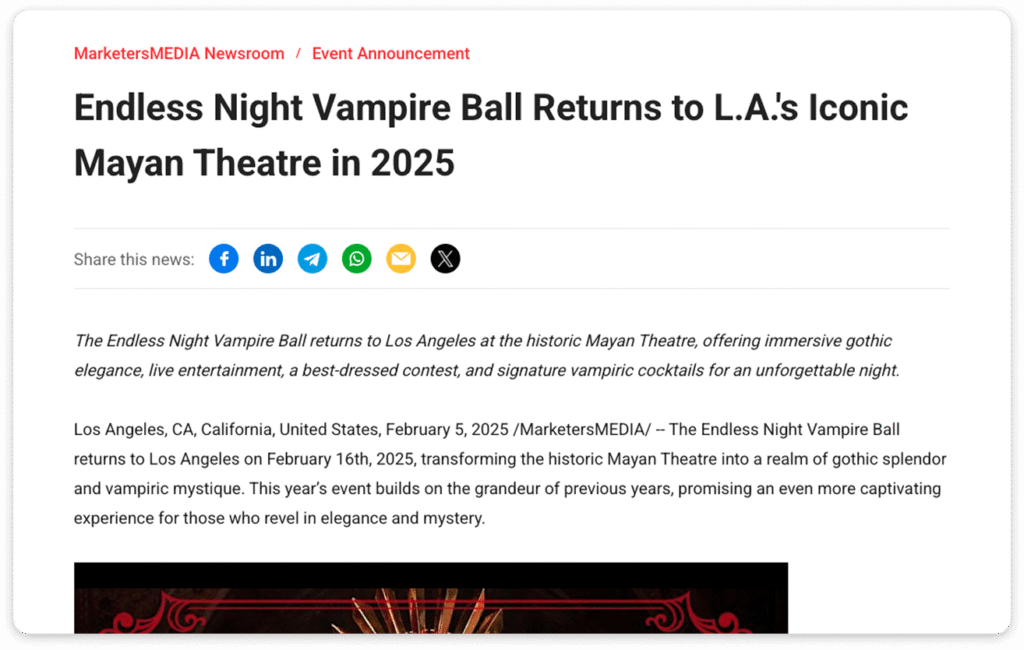
Intent: Generate media coverage and establish market credibility
Examples: Microsoft’s major announcement releases, Salesforce acquisition announcements, Adobe’s Creative Cloud launches
Psychological Triggers That Work: Authority, social proof, industry validation
Common Sample: “FOR IMMEDIATE RELEASE (Company) Announces New Product Launch (City, Date) – (Company) today announced the launch of (Product), a new solution designed to help businesses improve productivity. The product includes several innovative features and is now available to customers.”
Strategic Sample: “FOR IMMEDIATE RELEASE Industry Study: 73% of Remote Teams Waste 2.3 Hours Daily on Communication Inefficiencies, New Platform Reduces This by 67%
Independent Research Reveals Massive Productivity Drain Costing Companies $47B Annually
CHICAGO, (Date) – A comprehensive study of 1,247 remote teams across Fortune 1000 companies reveals that communication inefficiencies are costing the average enterprise $3.2M annually in lost productivity. The research, conducted by [Independent Research Firm], found that 73% of distributed teams waste an average of 2.3 hours daily on miscommunication, redundant meetings, and context-switching.
Key Findings:
- An average of 47 communication tools per organization creates confusion
- 67% of employees report missing critical project updates
- Companies using unified communication platforms show 34% higher productivity scores
‘This research validates what we’ve seen across thousands of client implementations,’ says [Expert Name], former VP of Operations at Google and current CEO of [Company]. ‘The solution isn’t more tools, it’s smarter integration.’
The study coincides with the launch of (Platform), which demonstrated a 67% reduction in communication waste during beta testing with 15 Fortune 500 companies…”
How Psychology Applies: Leads with credible third-party research for immediate authority (ethos), includes specific statistics and financial impact (logos), features expert credentials and validation (ethos), and positions the product as a logical solution to an independent, validated problem (logos). The pathos element comes through the massive scale of the problem ($47B annually).
7. Video Scripts & Webinar Content
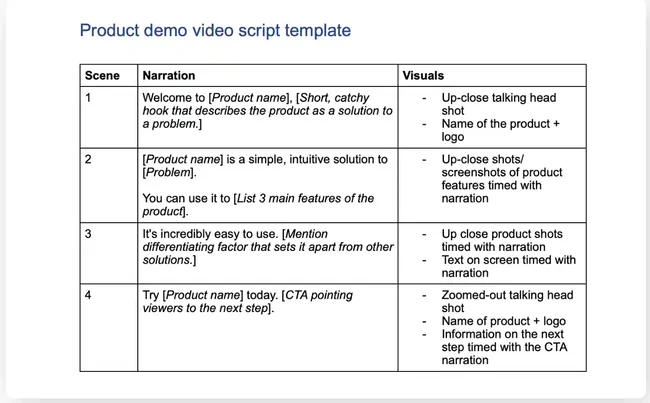
Intent: Engage audiences through educational and persuasive presentations that build relationships and demonstrate expertise
Examples: HubSpot Academy courses, Salesforce Trailhead modules, Adobe Max conference presentations
Psychological Triggers That Work: Personal connection, expertise demonstration, interactive engagement
Common sample: The webinar was titled “How to Grow Your Business Online.” It opened with a long introduction about the company, followed by a basic explanation of what digital marketing is and why it matters. Most of the session felt like a generic lecture, with broad topics, no unique insights, and nothing attendees couldn’t find in a blog post. Toward the end, the host shifted into a full-blown sales pitch about their services, leaving barely five minutes for questions. It felt more like a commercial than a webinar, and attendees left with no real value or reason to trust the brand.
Strategic Sample: Now imagine a session called “How Small Teams Can Double Leads Without Increasing Ad Spend in 30 Days.” It starts with a relatable story, a small marketing team wasting nearly half their ad budget without realizing it, and promises to show exactly how they turned things around. The host briefly introduces themselves with one slide of results to build credibility, then dives straight into three clear steps backed by real examples. Midway, they share a quick case study showing the before-and-after numbers to prove the system works. At the end, they offer a simple next step for those who want help implementing it, not a hard sell, just an option. The Q&A runs long because people are genuinely engaged and curious.
The difference: The first webinar talks at people. The second one speaks to them. It hooks attention with a real problem, delivers practical value, uses proof to build trust, and sells by helping, not by pushing. The difference isn’t the format or slides; it’s how well the content connects to what the audience actually cares about.
How you can apply this: Start with a specific problem your audience cares about, not a broad topic. Structure your webinar like a story: open with a real challenge, show your method as the solution, and end with the transformation or proof. Keep your intro short and credibility-focused, spend most of the time teaching real value, and close with a soft call to action, inviting, not pushy. This way, your webinar feels helpful, human, and naturally persuasive.
8. Ebooks & Guides
Intent: Capture leads while providing substantial value and establishing comprehensive expertise
Examples: HubSpot’s comprehensive marketing guides, Salesforce’s industry-specific playbooks, McKinsey’s detailed industry reports
Psychological Triggers That Work: Authority building, value reciprocity, and comprehensive trust development
Common Sample: “The Complete Guide to Email Marketing Table of Contents:
- Introduction to Email Marketing
- Building Your Email List
- Writing Effective Subject Lines
- Designing Email Templates
- Measuring Success
- Best Practices
- Conclusion”
Strategic Sample: “The B2B Revenue Recovery Playbook: How 47 Companies Turned Declining Sales Into Record Growth (2024 Edition)
Forward by (Industry Expert) ‘Having advised Fortune 500 companies through three economic downturns, I can confidently say this playbook contains the most actionable revenue recovery strategies I’ve seen. The case studies alone are worth millions to the right organization.’
What’s Inside:
- Chapter 1: The Anatomy of Revenue Decline (Why 73% of companies misdiagnose the real problem)
- Chapter 2: The 90-Day Revenue Triage Framework (Used by TechCorp to recover $12M)
- Chapter 3: Account-Based Recovery Strategies (How ManufacturingPlus saved their largest 20 accounts)
- Chapter 4: Sales Process Optimization (The 3 changes that increased close rates by 156%)
- Chapter 5: Customer Success-Driven Expansion (Turning churn risk into an expansion opportunity)
Bonus Materials: → Revenue Recovery Calculator Spreadsheet → 67-Point Recovery Audit Checklist
→ Email templates for at-risk account outreach → Video walkthrough of implementation process
Based on analysis of $2.3B in recovered revenue across 47 B2B companies, 2022-2024“
How Psychology Applies: Includes expert endorsement for immediate credibility (ethos), provides a comprehensive framework with specific quantified results (logos), offers immediate actionable value through tools and templates (pathos – reduces professional anxiety), uses detailed case studies for proof (ethos + logos), and positions as exclusive insights unavailable elsewhere (pathos – professional FOMO).
Best Practices for B2B Content Writers
1. Address Multiple Stakeholders Simultaneously
B2B decisions involve multiple people with different priorities. According to Gartner, the average B2B purchase involves 6-10 decision-makers. Your content must speak to technical evaluators, financial approvers, and end-users simultaneously.
2. Build Long-Term Relationship Value
Unlike B2C’s shorter sales cycles, B2B relationships often span months or years. LinkedIn research shows that 89% of B2B buyers research extensively before making decisions. Focus on nurturing through valuable content rather than pushing for immediate conversion.
3. Leverage Industry-Specific Expertise
Generic B2B content fails because industries have unique challenges, regulations, and metrics. Content Marketing Institute data reveals that industry-specific content generates 67% more engagement than generic business content.
4. Provide Concrete ROI Calculations
B2B buyers need defendable numbers. Include specific metrics, case studies, and calculator tools that help prospects build their internal business case. Aberdeen Group research shows that companies providing ROI calculators see 45% higher conversion rates.
5. Use Progressive Information Disclosure
B2B buyers want comprehensive information but delivered in digestible stages. Structure content journeys that gradually build complexity and commitment, similar to effective B2C audience psychology principles but adapted for longer decision cycles.
6. Optimize for Committee Decision-Making
Create content that’s easily shareable and defendable to others. Include executive summaries, key takeaway boxes, and social proof that helps champions advocate internally for your solution.
7. Build Email Lists Strategically
B2B email lists require different approaches than B2C. Focus on value-based lead magnets like industry reports, assessment tools, and exclusive research that professionals can use in their work. Learn more about building quality email lists with tactics that work for professional audiences.
Transform Your B2B Content with Psychology-Driven Strategies That Convert
Understanding B2B psychology is one thing; applying it effectively is another. Real impact comes from experience: knowing which content formats, tones, and psychological triggers work best in different buying scenarios.
The strongest B2B content strategies don’t just share information; they follow a proven psychological framework that:
- Address real business challenges with clarity and depth
- Speak to the priorities of multiple decision-makers
- Build credibility through data, case studies, and recognition
- Nurture long-term relationships across complex sales cycles
Whether it’s thought leadership, product messaging, or email sequences, the goal is to align your content with how decision-makers actually think, feel, and decide.
That’s what I help brands do: craft content that earns trust, triggers action, and turns credibility into measurable growth.
Hire Me – Get B2B Content That Converts Decision-Makers
I apply these psychological frameworks across every B2B content type you need, from thought leadership articles and email nurture sequences to landing pages, product messaging, and whitepapers.
Whether you need content to educate prospects, generate qualified leads, or drive conversions, I create materials that decision-makers trust, share, and act upon.
Experience the Impact Firsthand (Risk-Free): New clients get a free sample piece, no strings attached. Email me at contact@danielwrites.com to discuss your project and secure your complimentary sample.
Start with a free sample, not just a demo, something you can use