How Content Nurtures Leads to Sales: From First Click to a Customer
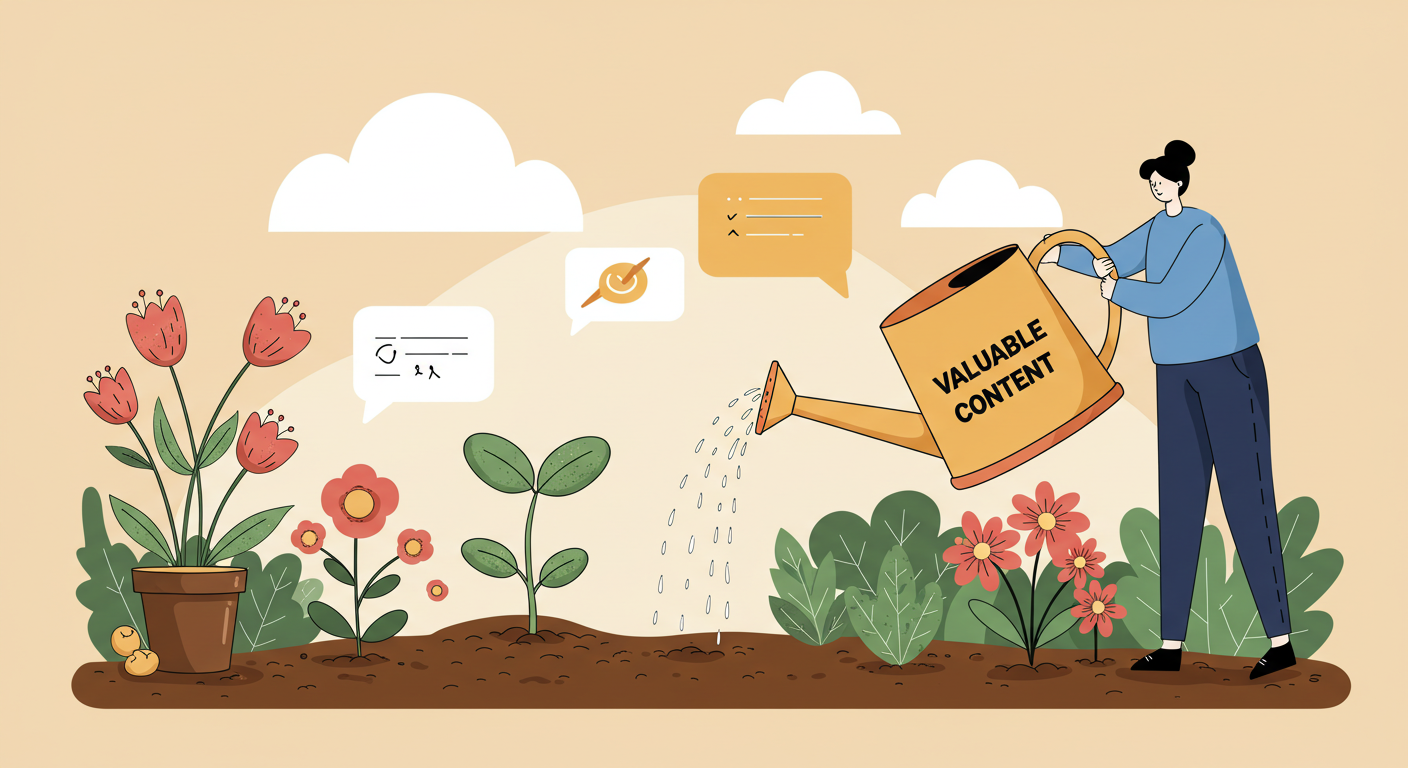
Content is the backbone of the modern sales funnel. While ads and social content can capture attention, it’s often content that carries prospects out from the curiosity stage to the conversion stage. Without strong nurturing, most leads can slip away. Several studies hint that over 80% of your ideal leads never become paying customers.
Let me paint the journey of a typical SaaS buyer:
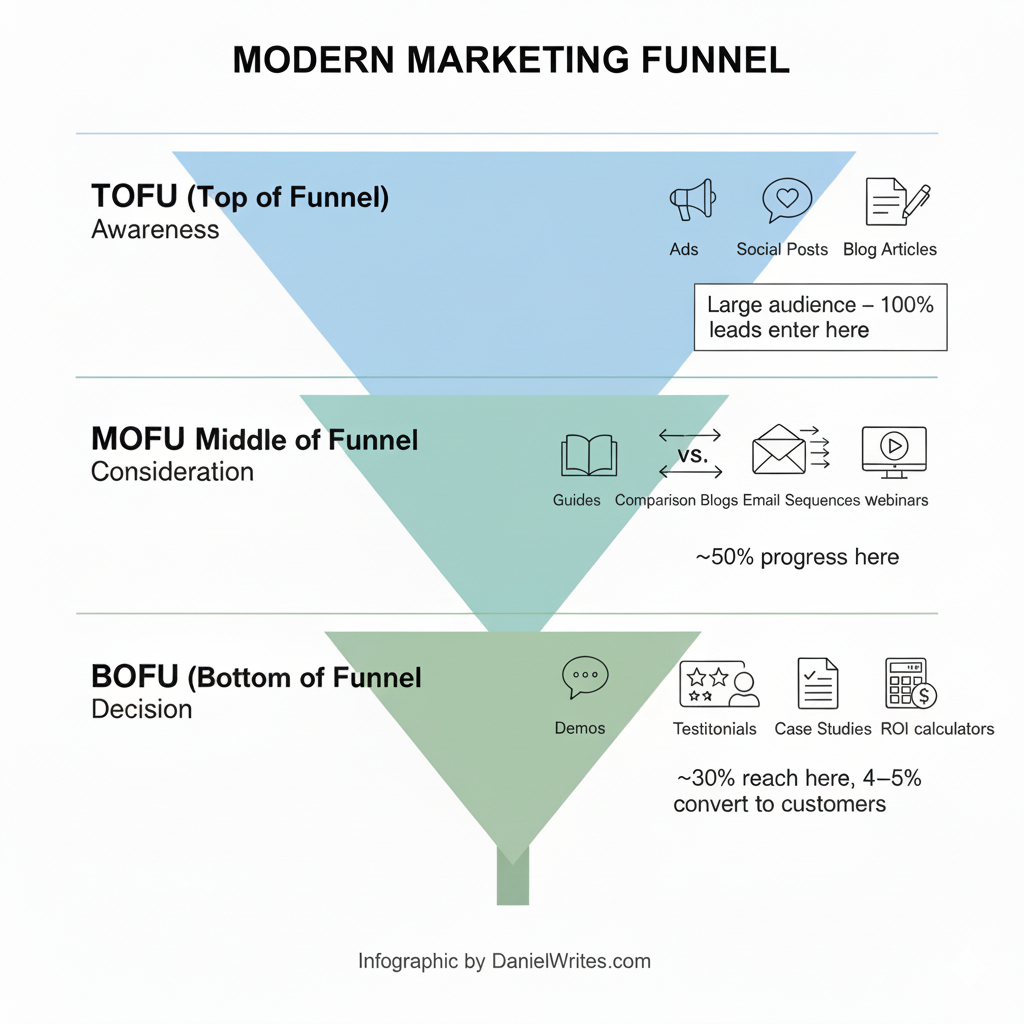
- TOFU (Awareness): They see your Facebook ad and click out of curiosity. And at this stage, most people won’t buy.
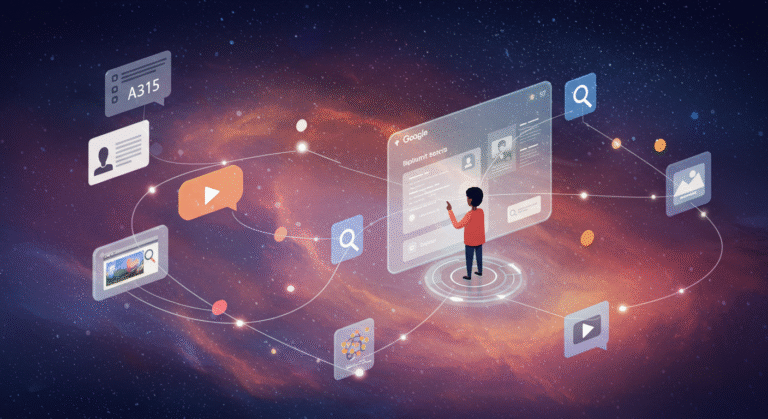
- Next step: Instead of buying, they Google your brand or ask an AI assistant about you. This is where it gets risky: if you don’t have optimized content answering their questions, someone else will.
- MOFU (Consideration): What they’re really searching for at this stage are feature breakdowns, how-to guides, and comparisons with alternatives. If your content isn’t showing up, a competitor’s will, and research shows that when people don’t find satisfying information about a brand, they default to a competitor’s solution, more like a typical experience we do have.
- BOFU (Decision): Once they’ve gathered enough information, the final push may come from attempting a free version or trials, demos, or converting right away.
This is exactly what content nurturing does: it fills the gaps in that discovery process, making sure your brand stays present from the first spark of awareness to the final buying decision.
Although it might sound simple in many cases, this cycle can last up to a month or even longer.
What You’ll Learn in This Guide
I’ll walk you through how content nurturing can transforms curious visitors into paying customers, and why most brands fail at it.
You’ll see:
- What lead nurturing really means (and how it differs from just creating content)
- The three-stage funnel breakdown – TOFU, MOFU, and BOFU, with real examples at each stage
- The metrics that actually matter – not vanity stats, but progression signals that tie directly to revenue
- A real case study – how one B2B agency boosted conversions by 340% through strategic content sequencing
- 6 key takeaways – what separates brands that get clicks from brands that get customers
- Implementation steps – practical actions you can start using in your own funnel right away
By the end, you’ll understand why 80% of leads never convert, and exactly how to fix that with a smarter content system.
What Is Lead Nurturing?
Lead nurturing is the process of building relationships with potential customers by providing valuable content at each stage of the funnel. Instead of pushing for an immediate sale, you offer educational, relevant, and trust-building resources that slowly guide prospects toward buying.
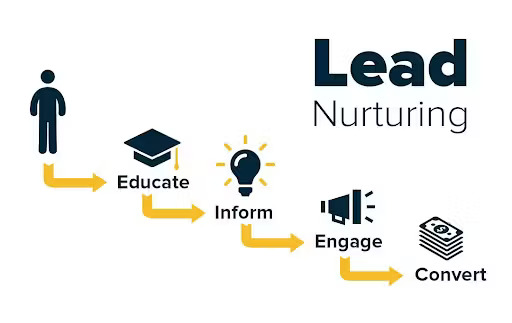
Example of nurturing content:
- Blog posts that answer beginner-level questions (TOFU).
- A webinar or newsletter that provides deeper value (MOFU).
- A free trial or testimonial video that builds buying confidence (BOFU).
Lead Nurturing vs. Direct Conversion
While ads and direct social campaigns can drive clicks, they often fall short in creating conversions. 97% of people ignore cold calls, showing how little appetite exists for “direct” selling. Contrast that with blogs: 55% of B2B marketers say articles are the most effective content type.
The Challenge: 50% of marketers consider lead generation a top priority, and yet 80% of new leads never convert into sales. The point here is that most brands focus solely on lead generation without strategically nurturing those leads through content that can lead to sales.
Your Goal: Use content strategically across TOFU, MOFU, and BOFU stages to guide your prospects from initial awareness to final purchase decision.
How Content Nurtures Leads Into Sales: From First Click to a Customer
Stage 1: Awareness (TOFU) — The First Click
The awareness stage is where potential customers first encounter your brand, often through organic discovery or targeted advertising. At this crucial first touchpoint, your content must capture attention, provide immediate value, and gently guide prospects into your nurturing funnel without overwhelming them with sales messages.
Effective TOFU Content Examples:
- Social Media Content: Carousel posts highlighting industry statistics or quick tips
- Paid Ads: Problem-focused headlines like “Struggling with team productivity? You’re not alone.”
- Blog Posts: SEO-optimized articles targeting informational keywords
- Lead Magnets: Free resources like checklists, templates, or industry reports
Key Metrics to Track:
- Impressions and reach
- Click-through rates (CTR)
- Time on page
- Lead magnet download rates
- Social engagement rates
Common Mistakes Brands Make at This Stage:
- Being too sales-heavy – Pushing products instead of providing value
- Poor targeting – Showing advanced solutions to people just discovering the problem
- Weak value proposition – Failing to clearly communicate what’s in it for the prospect
- Inconsistent messaging – Confusing brand identity across different channels
Case Insight: In our featured case study, a B2B marketing agency increased its TOFU conversion rate by 340% by replacing product-focused ads with problem-focused content. Instead of promoting “Our Marketing Automation Platform,” they created content around “5 Signs Your Marketing Team is Burning Out” with a free burnout assessment tool. This approach generated 3x more qualified leads because it balances emotions with their professional relevance.
Stage 2: Consideration (MOFU) — Building Trust & Connection
Once prospects are aware of their problem and your brand’s existence, they enter the consideration stage where they’re actively researching solutions and evaluating options. This is where your content must shift from problem identification to solution education, building trust and positioning your brand as the logical choice.
High-Impact MOFU Content Formats:
- Email Sequences: Educational series that gradually introduces your solution
- Webinars: Live demonstrations of expertise and solution capabilities
- Comparison Guides: Honest evaluations of different approaches or tools
- Case Studies: Real-world success stories with measurable results
- Newsletters: Regular value-driven communication that stays top-of-mind
- How-to Guides: Detailed instructions that showcase your methodology
How Leads Engage Differently at MOFU: Unlike TOFU prospects who consume content passively, MOFU leads actively engage, they ask questions, download multiple resources, attend webinars, and spend significant time researching. They’re comparing options, reading reviews, and seeking validation that your solution will work for their specific situation.
55% of B2B marketers say articles are the most effective content type for moving prospects through the sales funnel, highlighting the importance of substantial, informative content during this stage.
Critical MOFU Metrics:
- Email open and click-through rates
- Webinar attendance and engagement
- Resource download patterns
- Return visitor percentage
- Content sharing rates
- Progressive profiling completion
Case Insight: The same marketing agency created a 5-part email series called “The Marketing Leader’s Playbook”, which was sent over two weeks. Each email provided actionable strategies while subtly demonstrating how their platform enabled these strategies. This series achieved a 67% open rate and 23% click-through rate, with 34% of recipients requesting a consultation. The key was balancing education with soft product integration; each email was valuable standalone, while collectively building a case for their solution.
Stage 3: Decision (BOFU) — Converting Into a Customer
The decision stage is where prospects have identified their problem, researched solutions, and narrowed their options.
Your BOFU content must address final objections, provide social proof, and create urgency that motivates immediate action. This is where strategic content either seals the deal or loses the prospect to a competitor.
High-Converting BOFU Content Types:
- Customer Testimonials: Specific, results-focused success stories
- Detailed Case Studies: In-depth analyses showing ROI and transformation
- Free Trials/Demos: Hands-on experience with your solution
- Comparison Charts: Side-by-side feature and benefit comparisons
- Limited-Time Offers: Strategic urgency without appearing desperate
- Implementation Guides: Clear roadmaps showing what success looks like
- Risk-Reversal Content: Guarantees, warranties, or trial periods that reduce perceived risk
Common Friction Points That Kill Conversions:
- Unclear pricing – Hidden costs or confusing pricing structures
- Lack of social proof – No testimonials or case studies from similar companies
- Weak onboarding process – Uncertainty about implementation and support
- Poor timing – Not addressing budget cycles or decision-making timelines
- Feature overwhelm – Focusing on features rather than outcomes and benefits
Case Insight: Our agency case study revealed that their biggest conversion breakthrough came from creating a “Implementation Timeline Calculator” that showed prospects exactly what their first 90 days would look like.
This interactive tool addressed the #1 objection: “How long will this take to see results?” By providing a personalized timeline with specific milestones, they increased demo-to-close rates by 89%. The calculator collected additional qualifying information while providing immediate value, making the sales conversation more consultative and less pushy.
Learn more about conversion psychology in our detailed guide: The Psychology of Conversion and What Moves the Needle.
The Metrics That Matter Most in Nurturing
A million impressions mean nothing if no one moves closer to becoming a customer. What really matters are the progression signals, the small but powerful indicators that show prospects are walking down the path from “just curious” to “ready to buy.”
1. Awareness Stage Metrics (TOFU)
At the top of the funnel, the question is simple: Did you catch their attention?
- Click-Through Rate (CTR): Industry average is 2–5%, but top performers see 8–12%.
- Engagement Rate: Social posts should pull 3–6%.
- Time on Page: Strong TOFU content holds attention for 2–4 minutes.
- Lead Magnet Conversion: A solid magnet converts 15–25%.
2. Consideration Stage Metrics (MOFU)
This is the point where curiosity turns into research. Prospects usually head to Google or even AI assistants to compare options, and if your blog posts, comparison guides, or feature explainers don’t show up, they’ll find a competitor instead.
- Email Engagement: Opens in the 25–35% range; click rates around 3–5%.
- Content Downloads: 40–60% of MOFU prospects download multiple resources.
- Blog Engagement: Returning to read 3–5 posts (how-tos, comparisons, thought leadership) signals strong intent.
- Webinar Attendance: 30–50% of registrants should show up live.
- Return Visits: Most prospects visit 3–7 times before they’re ready.
3. Decision Stage Metrics (BOFU)
Now it’s about confidence and trust. Content like case studies, testimonial-driven blog posts, or product comparisons gives the final push. Without these, buyers often stall or look for alternatives.
- Demo/Consultation Requests: 15–25% of qualified MOFU leads move here.
- Conversion Rate: BOFU content typically closes at 20–40%.
- Sales Cycle Length: Good nurturing chops 20–50% off the time it takes to close.
- Customer Acquisition Cost: Nurtured leads cost about 50% less to win.
Case Study Progression Results
In our case, here’s what the funnel looked like over four months:
- Month 1: 2,847 TOFU leads generated.
- Month 2: 1,423 leads moved into MOFU (50% progression).
- Month 3: 398 reached BOFU (28% MOFU-to-BOFU rate).
- Month 4: 127 converted to customers (32% BOFU conversion rate).
That’s an overall TOFU-to-customer rate of 4.5%, more than double the industry average of 1–2%. And without content nurturing (especially blog content across MOFU and BOFU), those numbers would’ve been much worse.
The takeaway? Metrics aren’t about the number of impressions you got, but how many conversions you had eventually. They’re also about tracking the steady march of leads through your funnel, and making sure your content, especially your blog content, is doing its job at every stage.
Takeaways: What This Case Study Teaches About Content & Sales
1. Ads and Social Content Alone Won’t Carry You
This case study confirms what a lot of marketers quietly suspect: ads are great for sparking awareness, but don’t close a lot of deals.
Take the numbers: the Facebook ads generated 2,847 leads, but only 127 became customers, a 4.5% conversion rate. That lift was only possible because of strategically optimized blog content and nurturing sequences.
The big insight? Ads work best when they’re backed by a content ecosystem. Every click landed prospects into a carefully mapped path of blog posts, email sequences, and resources that built trust step by step. Without that support, the conversion rate would’ve been the industry-standard 1–2%.
2. Sequencing Beats Volume
More content isn’t better: Better content in the right order is better. Random blog posts won’t move the needle; a clear progression (awareness → consideration → decision) will.
3. Personalization Is Now Table Stakes
Prospects can detect generic content a mile away, which is increasingly common nowadays, especially with the rise of AI-generated content. Use your audience behavioral triggers, smart email follow-ups, and tailored blog recommendations to turn “just another lead” into someone who feels understood.
4. Value-First Always Wins
Content that exists purely to sell is usually ineffective; most people don’t want to buy, but will when it aligns with their solution. Each blog post, guide, or email should be value-driven. If someone walks away after engaging with your content feeling satisfied and more enlightened, they’re more likely to trust you more, return, or even convert right away.
5. Track Progression, Not Just Conversions
Most teams and sales managers normally focus on the final conversion rates, but the smarter insight is to track how effectively leads move between TOFU, MOFU, and BOFU. That’s how you spot leaks in your funnel and know exactly what to fix.
6. Sales + Content = Leverage
Nurturing works best when sales and content are in sync. When your product offering is backed up with content nurturing, lots of sales happen more naturally than being forced with ads. Due to well-optimized MOFU content, even your competitors’ leads can slip to your side.
Actionable Implementation Steps
- Audit your content against the TOFU/MOFU/BOFU framework.
- Identify gaps where prospects drop off.
- Set progression metrics for each stage.
- Add behavioral triggers for timely content delivery.
- Optimize based on actual engagement data, not gut instincts.
👉 And if you want to dive deeper into the psychology behind why this works, check out this related piece: SaaS Onboarding Psychology: How the First 7 Days Decide User Retention.
Conclusion & Next Steps
Content isn’t just a traffic driver; it’s your most powerful sales asset when it’s intentionally mapped to the customer journey. This case study shows that businesses can dramatically increase conversion rates and cut acquisition costs when they treat content as a systematic nurturing process instead of random “value creation.”
What Brands Must Be Doing
- Mapping Content to Buyer Psychology: Create content that speaks to emotional drivers and logical questions at each stage.
- Building Integrated Systems: Sync content engagement data with your sales process so handoffs feel seamless.
- Focusing on Progression Metrics: Stop obsessing over vanity stats, measure how well your content moves people forward.
Content Types You Should Be Creating
- Problem-Identification Content (TOFU): Educational resources, blogs, and social posts that help prospects recognize and articulate their challenges.
- Solution-Education Content (MOFU): Comparative guides, deep-dive blog posts, and case studies that show expertise and build trust.
- Decision-Support Content (BOFU): Testimonials, ROI calculators, demos, and implementation guides that remove the last doubts.
The difference between brands that get clicks and brands that get customers lies here: traffic only tells you people are curious, nurturing gets them ready to buy.
Ready to Transform Your Content Into a Revenue Engine?
Don’t let qualified prospects slip away because you lack the right nurturing content system. I specialize in building strategic content sequences that guide people from awareness to purchase.
Here’s how you can start today:
- Free Funnel Audit: I’ll analyze your current content strategy and pinpoint exactly where you’re losing potential customers.
- Custom Content Piece: Get a professionally written TOFU, MOFU, or BOFU asset tailored to your audience.
- Strategic Roadmap: Receive a step-by-step plan to implement a nurturing sequence that converts.
👉 Ready to stop chasing traffic and start driving revenue? Visit danielwrites.com to claim your free audit and discover how strategic content can boost your conversion and sales progress.
Your prospects are already searching for answers. Make sure your content leads them to you.