Google vs. AI Search: How Users Find and Interact With Content
The way we discover and interact with content is rapidly evolving. Just back in 2020, when you typed “best project management software” into Google. You’re faced with ten blue links, and your job is to click, compare, and decide for yourself. Fast-forward to today: the same search now shows you an AI Overview that answers the question even before you get the chance to scroll.
As Rand Fishkin put it:
“Google has become less a search engine and more of an answer engine. But that doesn’t mean clicks are dead, it means we have to optimize and compete differently.”
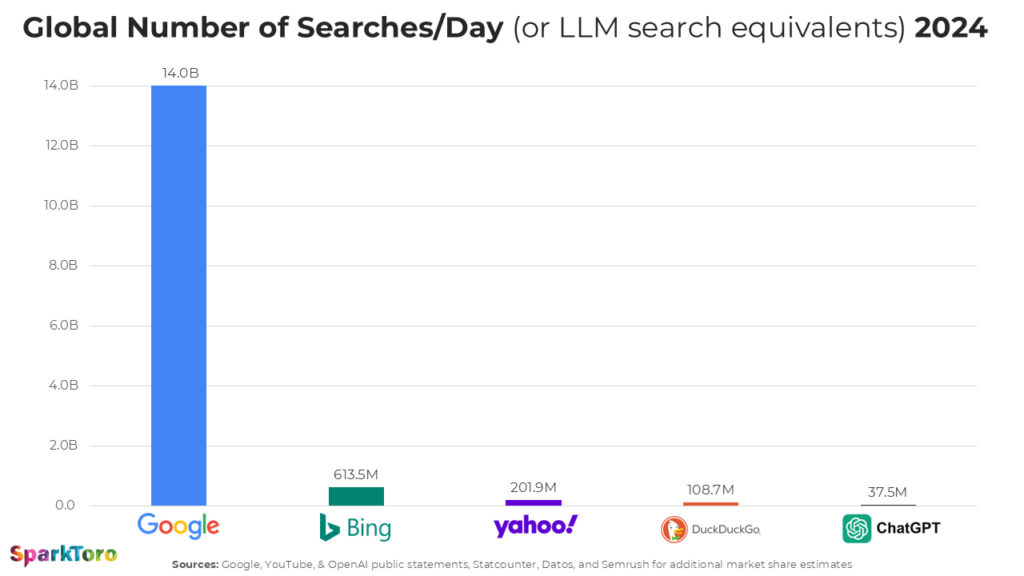
And here’s the paradox: AI is reshaping discovery, and yet Google still commands nearly 90% of the global search market. So here there’s something still worthwhile to chase despite the evolving trend.
What This Post Covers:
Below in this guide, you’ll learn how to navigate the new dual-track discovery system that has become stronger today:
- The evolution of search behavior — from blue links to AI synthesis
- The two-track system users navigate today — traditional search with AI integration vs. pure AI-model experiences
- Actionable optimization strategies for both discovery tracks
- Future predictions for search and content discovery (and how to prepare now)
By the end, you’ll understand exactly how to position your content for maximum visibility in both traditional search results and AI-powered discovery systems.
The Evolution of Search Behavior
Search isn’t what it used to be. We’ve moved from scrolling through “10 blue links” to getting quick answers in snippets, and now Google’s overviews and AI platforms want to finish the job. Instead of clicking first, most people just check the summary and only dive deeper if they need more.
1. From Blue Links to AI Synthesis
To understand where we’re going, we need to see where we’ve been. Search behavior has undergone three distinct phases, each fundamentally changing how users discover content.
2. Pre-AI Era (Pre-2023): The Keyword-Driven Hunt
Search was straightforward but time-consuming:
- Users typed keyword-heavy queries → Scanned 10 blue links → Clicked multiple results → Manually evaluated and synthesized information.
- Success for content creators meant ranking on page one for target keywords.
- SEO dominance centered on backlinks, keyword optimization, and technical factors
- The hunt for information was entirely manual.
One Reddit user highlighted the traditional search experience:
“I used to open 10 tabs, read through each one, and piece together my own answer. It was exhausting but at least I felt like I was getting the full picture.”
3. The Zero-Click Transition (2015-2023): Answers at the Point of Search
Google began answering questions directly on the search results page:
- Featured Snippets, People Also Ask boxes, and Knowledge Panels emerged
- Users could get answers without clicking through to websites
- Click-through rates dropped while search volume continued climbing
- The fundamental shift: Users stopped “hunting” for information and started consuming it at the point of search
Rand Fishkin, founder of SparkToro, has been tracking this trend closely:
“More than half of Google searches now end without a click to any web property. This isn’t a bug, it’s Google’s strategy.”
The writing was on the wall: Convenience would win over comprehensiveness, at least for simple queries.
4. AI Integration Era (2023-Present): Synthesis Before the Scroll
Search entered its most dramatic transformation:
- Google launched Search Generative Experience (SGE), now called AI Overviews, which appears in 13% of searches and is climbing.
- Alternative AI search engines emerged: ChatGPT Search, Perplexity, Bing Copilot.
- Answers are synthesized instantly from multiple sources with selective citations.
- Multi-turn conversational searches replaced single-query patterns.
A recent survey reveals that 83% of users now prefer AI search over traditional Google searches for certain query types, particularly informational and research-oriented questions.
As one tech worker commented on Reddit:
“I don’t even think of it as ‘searching’ anymore. I ask ChatGPT like I’m asking a colleague. If I need sources, I’ll ask for them. But most of the time, the answer is enough.”
5. The Current State: A Bifurcated Search Ecosystem
Search today is bifurcated. Users toggle between traditional organic results and AI summaries, sometimes in the same session.
They might ask ChatGPT for a quick explanation, then Google the same topic to verify with traditional sources. Or they’ll read Google’s AI Overview, then click through to the cited sources for deeper information.
Understanding the changing consumer behavior due to AI is important to grow your business visibility. Your audience doesn’t only think in terms of “traditional search” vs. “AI search”; they simply use whatever tool gets them the answer fastest and most conveniently. Your content strategy must perform across both systems.
How Users Discover and Interact With Content: The Two-Track System
This is where strategy gets practical. Understanding how users behave in each discovery system determines what you should create and how you should optimize it.
Think of it this way: Today’s content consumers live in two worlds simultaneously. They Google “how to reduce cart abandonment” and skim both the AI Overview and the organic results beneath it. An hour later, they ask ChatGPT to “explain cart abandonment solutions for Shopify stores specifically,” and may never visit a website.
Your content must perform in both arenas because your audience uses both, often within minutes of each other.
Track 1: Traditional Search Engines with AI Integration (Google, Bing)
How It Works Now:
The search experience has evolved into a layered system:
- User enters query
- AI Overview appears (if the query type triggers it)
- Traditional organic listings follow below
- User decides: “Did the AI Overview give me enough, or do I need more?”
The click is no longer the starting point; it’s the decision point.
What Triggers AI Overviews:
AI Overview appearance varies significantly by query type: 84% for informational queries, but only 7% for transactional searches. Understanding this pattern is crucial for content strategy.
AI Overviews appear for:
- Informational queries: “how to,” “what is,” “why does”
- Comparison searches: “X vs Y,” “best options for”
- Complex questions requiring synthesis from multiple sources
Less likely to trigger AI Overviews:
- Transactional searches: “buy,” “near me,” “discount code”
- Branded searches: “Nike Air Max,” “Slack pricing”
- Simple factual queries with one clear answer
User Behavior Patterns in AI overviews:
Not all users interact with AI Overviews the same way. Research shows four distinct behavior types:
1. Scanners (40-45% of users)
- Read the AI Overview
- Get their answer
- Leave without clicking (zero-click search)
- What they cost you: Visibility but no traffic
- What they give you: Brand exposure if you’re cited
As one Reddit user explained:
“If Google’s AI gives me the answer right there, why would I click? I’m busy. I got what I needed.”
2. Validators (30-35% of users)
- Read the AI Overview
- Click 1-2 cited sources to verify or go deeper
- These are users who cross-check AI answers with traditional sources
- What they want: Confirmation that AI got it right, or additional detail
- Your opportunity: Be the source they click
3. Skeptics (15-20% of users)
- Ignore or distrust the AI Overview
- Scroll straight to organic results
- Trust traditional ranking signals and familiar brands
- What they want: Control over their information sources
- Your opportunity: Strong organic SEO still wins here
A common sentiment on r/SEO:
“I don’t trust the AI summaries yet. Too many times I’ve clicked through and found they missed important context or got details wrong.”
4. Shoppers (5-10% of users)
- Use AI Overview for initial research
- Click through to compare products, read detailed reviews, or make purchases
- What they want: Decision-making information AI can’t provide
- Your opportunity: Transactional and comparison content
Key Takeaways for Content Creators
1. Optimize for AI Overview Inclusion
Google provides specific guidance on the top ways to ensure your content performs well in AI experiences on Search. The fundamentals include:
- Structure is everything: Use clear H2/H3 headers, short paragraphs, and scannable formatting
- Answer immediately: Position definitive answers in the first 150-200 words
- Implement schema markup: Articles with proper schema markup are 40% more likely to trigger rich results
- Build E-E-A-T signals: Expertise, Experience, Authoritativeness, Trust
- Content with clear author credentials gets cited 2.3x more in AI responses
- Include author bios with verifiable credentials
- Cite authoritative sources and link to original research
- Publish original data or unique insights
Consistency matters: Websites with consistent publishing schedules rank 45% higher on average, and content updated within the last 6 months is 58% more likely to appear in AI Overviews.
2. Make Your Organic Listing Irresistible
Your meta description must differentiate from what AI already provided. Promise something the AI Overview can’t deliver:
Generic: “Learn how to reduce cart abandonment.”
Compelling: “Complete cart abandonment playbook with 12 proven tactics, email templates, and ROI calculator”
Use language that signals depth:
- “With step-by-step video walkthrough”
- “Includes downloadable templates”
- “Real case study: How we recovered $47K in lost sales”
- “Compare all 15 tools side-by-side”
3. Focus on Content Formats AI Can’t Replace
Certain content types continue to drive clicks even in the age of AI synthesis:
- Original research and proprietary data: AI cites but can’t replicate
- Step-by-step tutorials with visuals: Screenshots, diagrams, videos add context
- Interactive tools: Calculators, assessment quizzes, generators
- In-depth product comparisons: Personal testing with specific use cases
- Community-driven content: User reviews, forum discussions, real experiences
- Case studies and storytelling: Specific results, timelines, lessons learned
- Transactional pages: Optimized for purchase decisions
The pattern is clear: Content that goes beyond surface-level information and provides original insight, interactive value, or transactional utility will earn more clicks and get more refereanced the most by both AI and other creators.
Track 2: AI-Native Search Platforms (ChatGPT, Perplexity, Claude, Gemini)
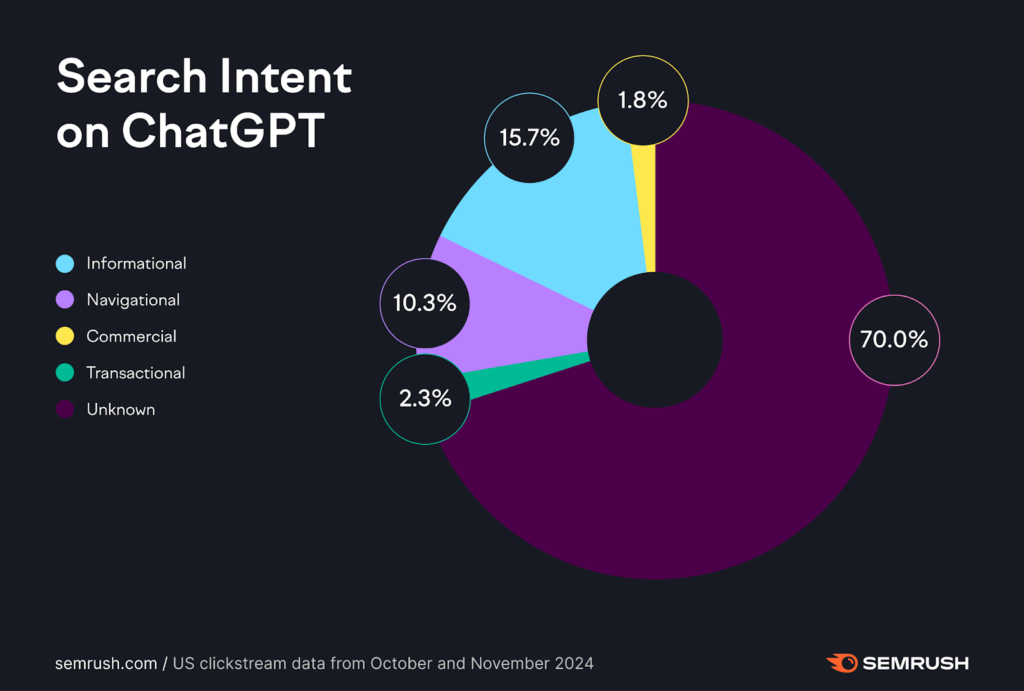
Here, discovery looks completely different. Queries are presented like conversations. A user might ask ChatGPT, “What’s the best CRM for a SaaS startup under $50/month?” and then refine their query two or three more times.
User behaviors:
- Information Gatherers: Ask broadly, get summaries, rarely click.
- Deep Divers: Click sources when they want detail.
- Delegators: Outsource research, then move to action.
- Action-Takers: Use AI to shortcut directly to tools or purchases.
How Creators Can Optimize for AI Citations
If AI is shaping how people find answers, then as a creator or a business, you need to think about how your work can show up in those answers. Getting cited by AI systems is becoming just as important as ranking on page one of Google, and there are clear ways to increase your chances.
Here’s how you can optimize your site and its content to get cited and credited by AI search platforms:
- Be clear and authoritative: AI models are trained to detect clarity. Write in a straightforward style, use clear definitions, and avoid fluff. This helps AI identify your content as a reliable source.
- Use structured formatting: Break your content into digestible formats that AI can easily scan:
- Headings that outline the flow of ideas.
- Bullet points and numbered lists for steps or strategies.
- Tables or comparisons when explaining differences.
- Back up claims with sources: AI is more likely to pull from content that cites credible references. Link out to studies, reports, or expert quotes — it signals reliability.
- Focus on depth and usefulness: AI tools are designed to answer questions, not just repeat keywords. Go deeper than surface-level content. Include examples, explain why something works, and anticipate follow-up questions.
- Make your expertise visible: Add bylines, credentials, or personal experience. “This is written by someone who’s done it” is a trust signal both humans and AI look for.
- Keep your content fresh: AI models crawl and retrain on newer content. Updating your posts regularly increases the chance of being surfaced and cited.
The key mindset shift? You’re not just writing for Google alone anymore. You’re also writing in a way that makes your content easy for AI to understand, trust, and quote.
For creators, this means one thing: you must become citation-worthy. Content with strong author credentials is cited 2.3x more often by AI systems. Long, comprehensive articles (average cited length: 2,847 words) are also favored.
The Future of Search & Content Discovery: Where Things Are Headed
The reality is that no one has a crystal clear insight into where search and content discovery are definitely heading. Sundar Pichai (the CEO of Google), in a video interview, was asked about the future of AI and search. He leans more on Innovative optimization based on users’ long-term and short-term seasonal trends. So you can get clarity on trends that are consistent and those that pass by, and how optimizing for both can impact your business.
So if you’re paying attention to how people are already using AI tools and Google’s own updates, the writing on the wall is pretty clear: you have to innovate, optimize, and anticipate trends.
Here’s what I think is coming next (and what it means for your content).
Prediction 1: AI Becomes the First Filter
More and more, people are going to “ask AI first, verify later.” That means Google’s AI Overviews or tools like Perplexity will be the first layer of discovery, while traditional search results play backup when users want to dig deeper.
Even Google admits this shift. In their AI announcement, they wrote:
“AI will organize the world’s information and make it universally accessible and useful in new ways.”
For me, this means more and more user adoption with AI tools.
What this means for you: Your content has to work twice as hard, structured enough that AI can pick it up, but also optimized to get users satisfied when they click.
Prediction 2: Human-Validated Platforms Will Keep Rising
Stats back it up: Reddit shows up in 98% of product-related searches (Google Think). Why? Because people don’t just want an AI summary, they want to hear from real people.
As one marketer put it on r/marketing:
“I think people trust Reddit more because they know these dudes are not getting paid to say this stuff. AI can summarize articles, but it can’t replicate lived experience.”
Platforms like Reddit, TikTok, and YouTube are becoming the “gut check” after AI gives the first answer.
What this means for you: Don’t bet everything on Google or AI. Build an authentic presence in communities where people validate information, or any platform where your target audience hangs out.
Prediction 3: SEO Turns Into ‘Information Packaging’
Forget keyword stuffing and backlink games. The new SEO is about:
- Clear, structured information
- Authority signals (EEAT)
- Being citation-worthy for AI
As SEO expert Marie Haynes explains:
“It’s no longer just about ranking, it’s about whether you’re the source AI trusts enough to cite.”
What this means for you: Stop just asking “Will I rank?” and also ask, “Will AI cite me as a source?”
Prediction 4: Personalization & Multimodal Search Becomes More Common
Search won’t just be text. Voice, video, and images will become more and more common as standard inputs. You might ask:
- “Show me running shoes like these, but waterproof.”
- “Play me reviews of this laptop from real students.”
What this means for you: Generic, one-size-fits-all posts won’t cut it. You need content that speaks directly to specific use cases and problems.
Prediction 5: Content Strategy Has to Be Multi-Layered
The best-performing brands in 2025 and beyond will:
- Write for humans first → depth, originality, actionable value.
- Structure for AI → schema, formatting, clarity.
- Distribute everywhere → Google, AI tools, Reddit, TikTok, YouTube.
- Build direct relationships → email lists, owned communities, brand loyalty.
When AI can summarize anyone’s content, relationships, and unique offerings, and perspective becomes your moat.
Bottom line: AI-powered discovery is here to stay, but can’t completely replace traditional search; it’s layering on top of it. The brands that thrive will be the ones that create content that’s both AI-friendly and human-trusted.
Conclusion: Thriving in the Dual-Track Era
Search has gone from blue links → snippets → AI synthesis. Today, users live in two discovery systems at once: traditional Google and AI-native search. Both reward authority and trust, but they each demand different optimizations.
The reality is clear: this isn’t about choosing between traditional SEO and AI optimization. You have to master both, because your audience is using both.
And the numbers back it up: according to Salesforce, 32% of marketing organizations have fully implemented AI, and 58% of marketers are already using AI tools for content creation. Meanwhile, HubSpot’s industry report shows that AI-powered discovery is already reshaping marketing workflows. The competitive landscape isn’t just shifting, it’s accelerating.
Your Next Steps: Take Action Today
Step 1: Audit Your Current Position
- Where do you appear in AI Overviews?
- Are you cited in AI search responses (ChatGPT, Gemini, Perplexity)?
- Does your content follow an AI-ready structure (headers, schema, EEAT signals)?
- What % of your content drives actual clicks vs. just citations?
Step 2: Optimize for the Dual-Track Reality
- Update high-traffic pages with an AI-friendly structure.
- Create new content that balances AI discoverability with human depth.
- Build citation-worthy authority in your niche.
- Invest in content types AI can’t replicate: tools, calculators, original data.
Step 3: Get Expert Help to Accelerate Results
The search revolution is already here. Every day without a dual-track strategy is a day your competitors get ahead. That’s where I can help:
- Free Content Audit – I’ll analyze how your current content performs in both Google and AI search.
- Free Content Sample – One piece of optimized content, structured for AI but written for people.
- Free Site Audit Report – A roadmap to use content for more leads and sales in the AI era.
👉 Ready to see how prepared your site is? Start with your free audit & content piece at DanielWrites.com.
The data is clear: AI search is already driving fundamental changes in how users discover and validate content, according to Search Engine Journal. Businesses that adapt early don’t just survive but dominate their niche; they gain an early-mover advantage.
Don’t wait for competitors to figure this out first. The window is closing. The only real question is: will your content be found, or overlooked?